
Summarize this Farsight Labs article with AI:
 Ask ChatGPT
 Ask Grok
 Ask Perplexity
 Ask Claude
 Ask Google AI
The Story: The Mole
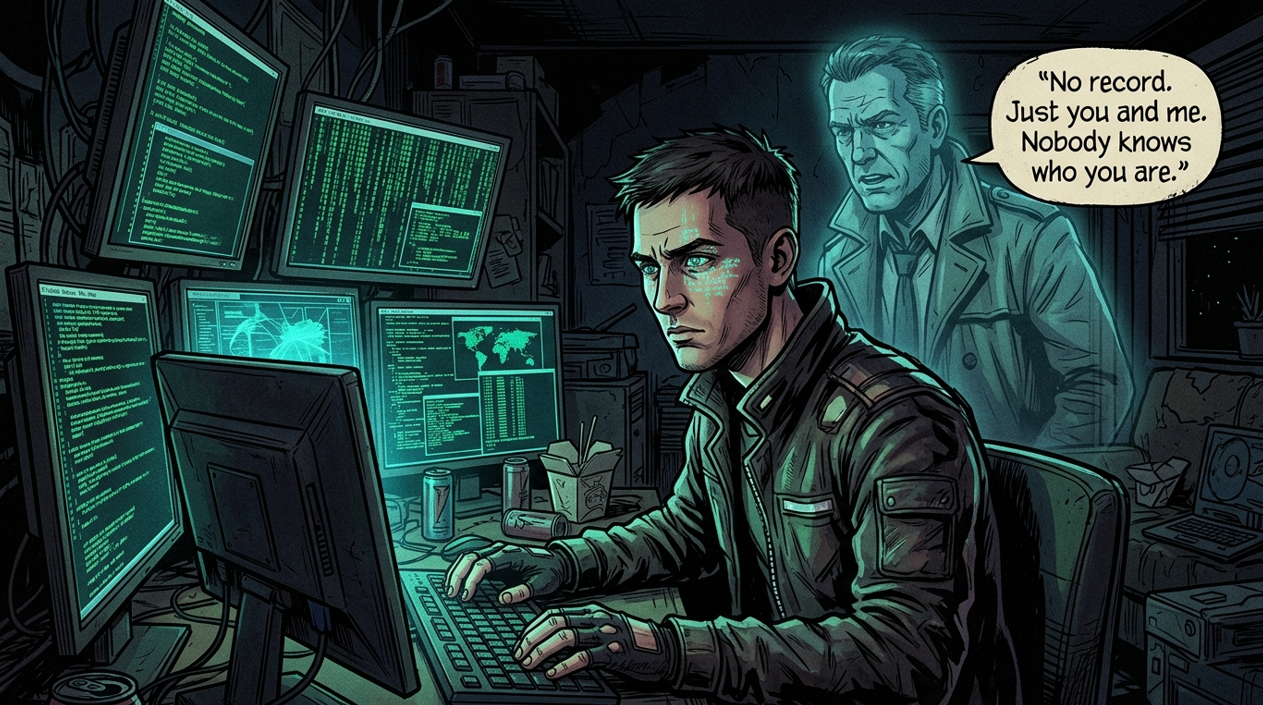
“Welcome to the inner circle, Ghost.”
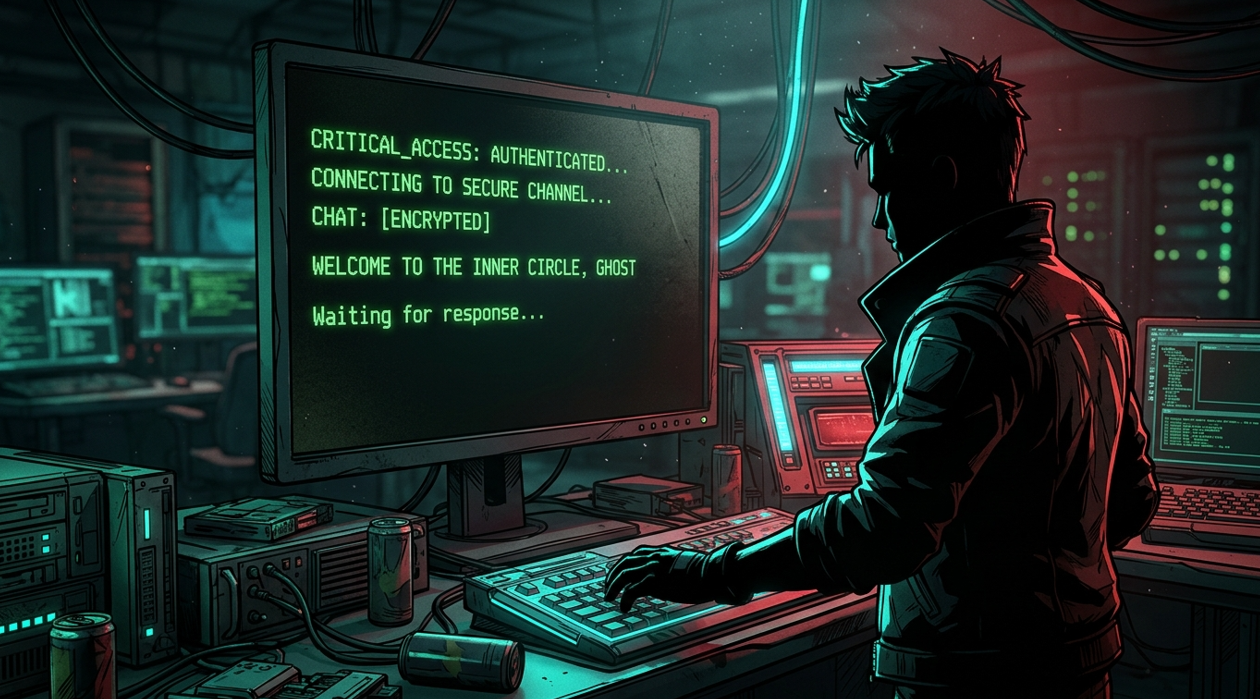
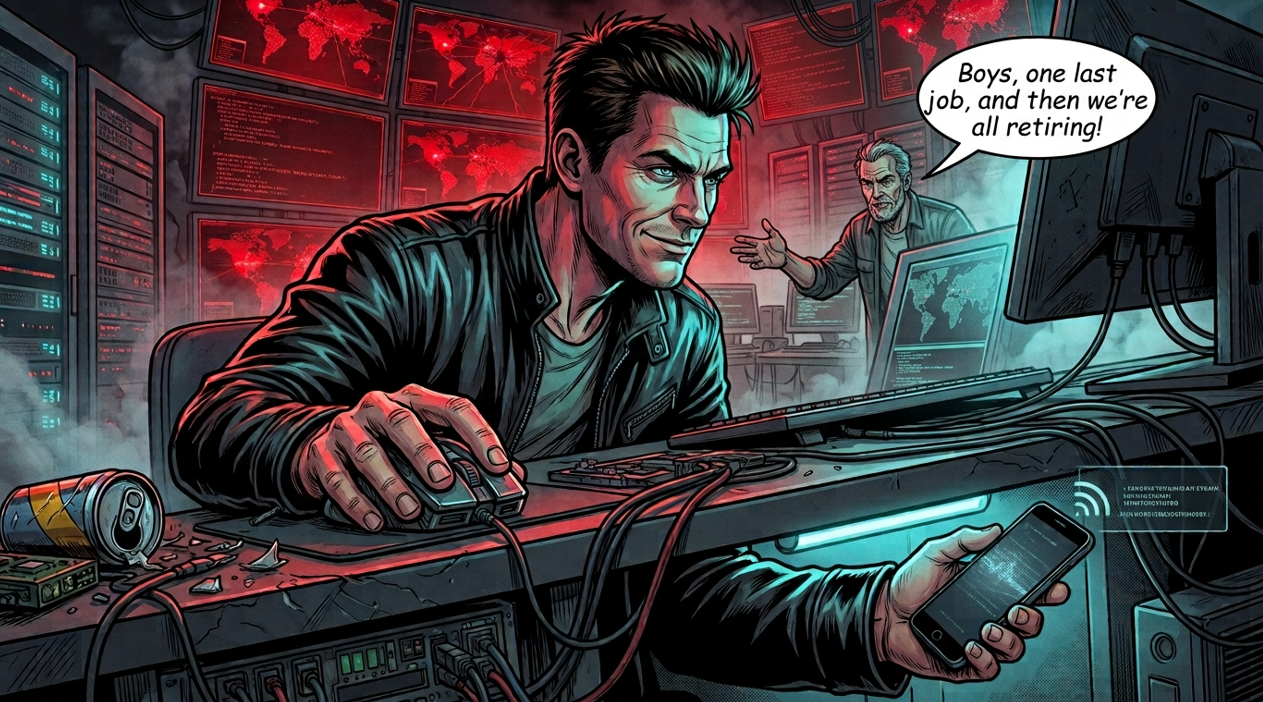
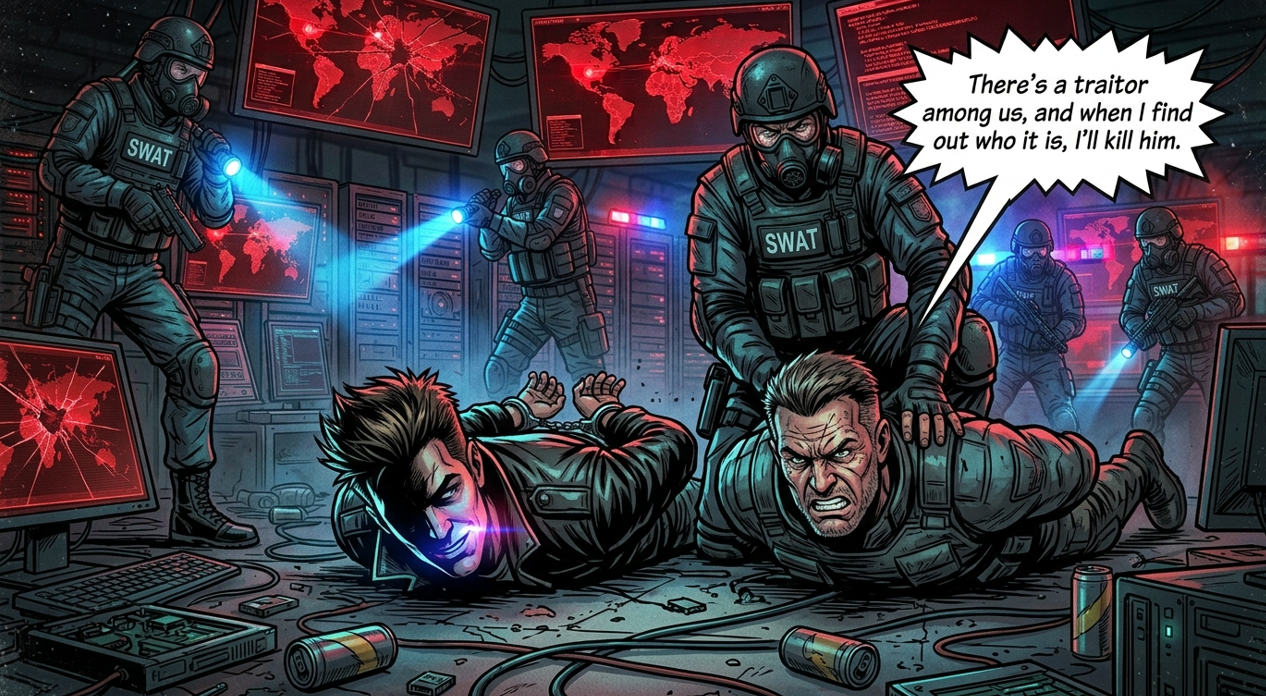
As the officers push Mr. Ghost down alongside them to protect his identity, a subtle, barely perceptible smile touches the corner of his lips. He remains nameless, but the mission is complete.
Threat Overview
TeamPCP—a cybercriminal group focused on the open-source software supply chain—developed and deployed a malware strain called CanisterWorm. It was used to target developers and compromise the open-source ecosystem, enabling the group to spread malicious code and further its supply-chain attacks.
Everyone in the room believed the person behind each account was an associate. At least one was not. From around March 2026, one of those accounts reportedly belonged to an undercover analyst from Mandiant, Google’s security subsidiary.
The analyst quietly watched an attack reproduce itself: malicious code reached developer machines and continuous-integration (CI) pipelines, tokens and cloud keys were stolen, and publishing rights were used to poison the next package. By the time a company noticed an unauthorized release, the compromise could already be moving downstream.
Sangfor Investigation
How the Undercover Intelligence Helped Victim Companies
- Supply-chain compromise continued downstream—TeamPCP’s activity centered on altered open-source components and stolen credentials, including worm-like propagation publicly associated with the name Mini Shai-Hulud.
- Stolen accounts kept expanding access—The accounts and tokens were more than one login; they opened the next package, platform, or organization.
- Revoke first, then notify—Defenders pushed cloud and identity platforms to cancel exposed credentials before contacting organizations one by one, narrowing the window for reuse.
- The authentication bypass was caught early—Reporting says the inner circle included AI-assisted work on a two-factor bypass for a login product. The vendor fixed it after a private warning.
- The trail was passed to law enforcement—Later reporting describes Australian law-enforcement action involving alleged members. Identity and responsibility remain a matter for the courts.
Accounts and authorizations that should have expired but still work are often harder to detect than a loud, destructive attack. The longer unusual publishing, installation, and token use remain unnoticed, the farther the compromise can travel down the supply chain.
Why This Attack Chain Is Hard to Stop Early
Supply-chain attacks are difficult to spot because malicious activity can borrow legitimate tools and valid permissions. Dependency installation is expected to execute code. CI is expected to read secrets. Publishing accounts are expected to push new versions. Once attackers steal those permissions, their actions can still resemble ordinary development work.
| Surface activity | Why it is easy to miss | Actual risk |
| A dependency installs normally | Install scripts are expected to execute code | Malicious code enters the development environment |
| CI runs normally | Pipelines are expected to read secrets | Tokens and cloud credentials are stolen |
| A valid account publishes a version | The publishing account has legitimate permissions | A poisoned package reaches downstream users |
| Several accounts become active | The logins appear scattered and legitimate | Attackers expand access and prepare extortion |
In short, TeamPCP turned existing development permissions into attack tools. Companies need to detect altered components, stolen credentials, and unauthorized software releases as early as possible.
Attack Chain and MITRE ATT&CK Mapping
| Stage | What it looks like in practice | ATT&CK (approximate) |
| Entering the supply chain | Delivering altered open-source components | T1195.001 |
| Taking credentials | Collecting tokens and keys from developer environments and CI | T1552 |
| Using them again | Expanding access with stolen accounts and tokens | T1078 |
| Automated propagation | Using stolen publishing rights to poison more packages | T1195.001 / T1078 |
| Applying pressure | Stockpiling credentials for extortion; public reporting also describes separate authentication-bypass research | Impact varies by case; the bypass research is a separate public thread |
These mappings are based on publicly disclosed behavior; the attack chain may differ across affected environments.
Recommended Actions
- Replace long-lived personal tokens with short-lived, narrowly scoped publish credentials, such as OIDC credentials requested per release.
- Pin critical dependencies by hash where practical, and review install scripts that execute automatically in CI.
- Watch for publishes that should not be there, maintainer changes, and permissions that appear suddenly.
- Rehearse a credential leak: contact the cloud and identity platforms and revoke first.
- Move high-privilege accounts to hardware keys, which are harder to phish.
- Add malicious dependencies, token leakage, unauthorized publishing, and emergency credential revocation to joint exercises for development and security teams.
How Sangfor Helps
| Pain Point | Sangfor Solution |
| Poisoned dependencies and compromised developer tokens bypass traditional signature defenses undetected. | Athena XDRCorrelates endpoint, network, and identity telemetry to detect behavioral anomalies and trace stealthy attack chains. |
| Internal teams lack 24/7 expertise to detect low-and-slow supply chain compromises amidst noisy legitimate developer traffic. | Athena MDRDelivers round-the-clock expert threat hunting and rapid managed containment to validate threats and revoke compromised tokens instantly. |
| Compromised developer machines or build servers silently exfiltrate stolen API keys and source code to C2 servers over encrypted channels. | Athena SASEEnforces Zero Trust least-privilege access and blocks malicious outbound C2 connections to prevent data and token exfiltration. |
Source Index
1. Cyber Kendra summary of Google/Mandiant visibility inside TeamPCP / CanisterWorm (Sep 2026)
2. IT Magazine coverage of the undercover disclosure (Sep 18, 2026)
3. Pivot News summary of the Mandiant analyst’s access and the related activity
Information current as of September 2026. Factual boundaries follow the public sources listed above.