
Reduce the complexity of cloud data center construction and management through standardized, process-oriented, and automated Sangfor cloud computing platform.
What is Sangfor Cloud Platform (SCP)?
Sangfor Cloud Platform is an enterprise-grade Cloud Management Platform that simplifies IT operations by unifying the management of compute, storage, networking, and security resources across heterogeneous environments. Sangfor Cloud Platform provides unified cloud management and orchestration across Sangfor HCI, VMware environments and physical servers.
Sangfor Cloud Platform Technical Highlights
SCP uses a three-level role model: Platform Administrator, Tenant, and Tenant User. Platform Administrators hold full control over resources, networking, and licensing. Tenants manage their own quota and users, requesting more as needed. Tenant Users manage only their assigned VMs. A self-service work order flow routes requests through tenant and admin approval, with automatic resource issuance once approved — built for enterprises, MSPs, and multi-department environments needing clean resource isolation.
SCP combines microservice, distributed, and cloud-native design for reliability at scale. Stateless services scale out with load balancing while stateful services stay on dedicated nodes for consistency. In cluster mode, a master/slave model with synchronous replication ensures failover without data loss.
Powered by the Sangfor AIOps Engine, SkyOPS covers over 150 failure scenarios, predicting issues 7 to 30 days in advance, identifying them within 1 minute, and locating root causes within 3 minutes. Disk failure prediction reaches 90%+ accuracy using SMART attributes with deep-learning models, while memory failure prediction prevents over 90% of failures in advance. SkyOPS also flags idle VMs and recommends optimization based on usage trends.
SCP includes a built-in resource billing module supporting per-resource unit pricing across CPU, memory, and storage tiers. Administrators view full tenant and per-VM cost breakdowns, while tenants see their own usage and bills. Costs can be queried over any date range and exported to Excel for offline reporting. A Ceilometer module tracks real-time VM usage, polled every 10 minutes by the billing engine, with cost data refreshed hourly for near-live visibility.
SCP acts as a unified control plane beyond HCI, managing Sangfor HCI clusters, VMware vCenter clusters, and physical bare-metal hosts under one interface, with integration into AWS Cloud for heterogeneous public cloud management. For multi-site organizations, SCP supports hierarchical management through an integrated Sangfor Cloud and SCP architecture, unifying operations across dispersed data centers or campuses under a single organizational structure and admin hierarchy.
SCP delivers a complete IaaS layer (Compute, Network, Storage, Security, and Disaster Recovery) alongside PaaS services for Database-as-a-Service and Middleware-as-a-Service. A dedicated Memory Tiering feature uses NVMe SSDs to offload "cold" memory pages from DRAM, configurable per VM, directly supporting large-memory workloads under rising DRAM cost pressure.
Use Cases
Benefits
Save Time & Trouble
Smooth & Elastic
Compatible with a variety of physical hardware, flexibly support platform software upgrade and application expansion.
Secure & Reliable
Built-in security module to protect data center with fault monitoring and self-healing capabilities, to ensure continuous and reliable operation of business.
Comprehensive Business Carrier
Stably carry all types of user business and fully prepared for future business expansion
Save Time & Trouble
Reduce the complexity of cloud data center construction and management through standardized, process-oriented, and automated Sangfor cloud computing platform.
Smooth & Elastic
Compatible with a variety of physical hardware, flexibly support platform software upgrade and application expansion.
Secure & Reliable
Built-in security module to protect data center with fault monitoring and self-healing capabilities, to ensure continuous and reliable operation of business.
Comprehensive Business Carrier
Stably carry all types of user business and fully prepared for future business expansion
Reviews of Sangfor Cloud Platform on G2
G2 is one of the world’s leading software review platforms, collecting authentic feedback from verified users across industries. Unlike traditional analyst reports, G2 rankings and badges are based entirely on real customer experiences, including satisfaction scores, product usage, and detailed reviews. See Sangfor Cloud Platform recognition and ratings on G2.



Sangfor Business Proposition Deep Dive | Jackie Chen, Sangfor EMEA Managing Director
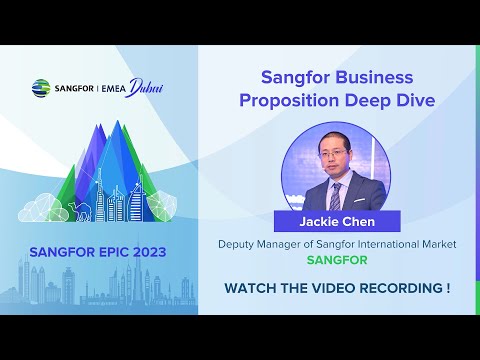
Sangfor Business Proposition Deep Dive | Jackie Chen, Sangfor EMEA Managing Director
Unlock the Power of Cloud with Subscription Cloud | Francis Tsang, Senior Cloud Solution Strategist
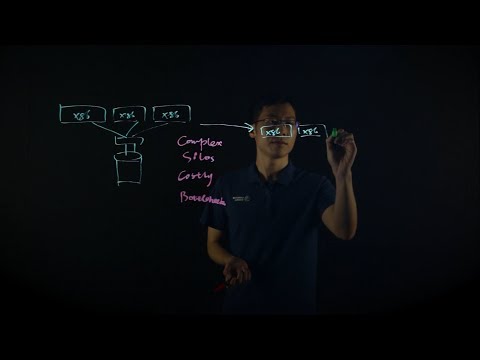
Sangfor aCloud Whiteboard Video
Latest Events

Live Webinar
Building AI-Ready Data Infrastructure with Sangfor aStor 5.3.2R1
Join our Sangfor aStor 5.3.2R1 webinar to explore AI-ready data infrastructure, object storage, vector buckets, unified data management, and data protection.
Date
:
05 Nov 2026
Live Webinar
Beyond VMware: Mastering Enterprise Workloads with Sangfor HCI 7.0.0
Explore Sangfor HCI 7.0.0 in our upcoming webinar. Discover how its enhanced resilience, ecosystem continuity, and localization solve VMware migration challenges.
Date
:
03 Sep 2026
Live Webinar
Sangfor & Veeam: Accelerating VMware Modernization and Data Protection
Date
:
27 Aug 2026
Latest Blog

Cloud and Infrastructure
Hyperconverged Infrastructure (HCI): 50 Enterprise Questions Answered
Explore 50 answers on HCI vendors, architecture, security, deployment and Sangfor HCI as an enterprise VMware alternative.
Date
:
06 Nov 2026
Cloud and Infrastructure
50 VMware Alternatives Questions Answered
Explore 50 answers on VMware alternatives, licensing, migration, security and data sovereignty, including Sangfor HCI capabilities and vendor comparisons.
Date
:
02 Nov 2026
Cloud and Infrastructure
Ensuring Enterprise High Availability: Running Windows Server Failover Cluster on Sangfor HCI
Learn how Sangfor HCI supports Windows Server Failover Cluster (WSFC), shared disks, and SCSI-3 PR for SQL Server FCI workloads as a VMware alternative.
Date
:
23 Oct 2026
Latest News

News
Sangfor Launches aStor All-Flash 5.3.2R1 to Power AI-Native Data Foundations
Sangfor launches aStor All-Flash 5.3.2R1, introducing high-performance object storage, Data Flow 2.0 and native vector storage for AI-native data foundations.
Date
:
05 Nov 2026
Press Release
Sangfor Technologies Named 'a Visionary' in the 2026 Gartner® Magic Quadrant™ for Server Virtualization Platforms Amid Rapid Global Expansion
Sangfor is recognized as a Visionary in the 2026 Gartner® Magic Quadrant™ for Server Virtualization Platforms, offering a flexible, AI-ready VMware alternative for enterprises.
Date
:
12 Oct 2026
Press Release
Sangfor Executive Forum 2026: Global Roadshow Wrap-Up
Sangfor's Executive Forum 2026 spanned 16 cities across Asia, Europe, and the Middle East, with standout growth in Europe and the Middle East.
Date
:
27 Aug 2026
Sangfor Cloud Platform (SCP) FAQs
What Can Sangfor Cloud Platform Do for Your Infrastructure?
Sangfor Cloud Platform (SCP) is an enterprise-grade cloud management platform that unifies infrastructure resource management, virtualization, cloud service delivery, and security capabilities. It enables organizations to build flexible private, hybrid, and managed cloud environments by providing a single pane of glass for managing heterogeneous resources, including Sangfor HCI, VMware vSphere, and public clouds. SCP simplifies IT operations through automation, multi-tenancy, and self-service portals.
Yes. SCP acts as a unified control plane beyond HCI, managing Sangfor HCI clusters, VMware vCenter clusters, and physical bare-metal hosts under one interface, with integration into AWS Cloud for heterogeneous public cloud management. For multi-site organizations, SCP also supports hierarchical management through an integrated Sangfor Cloud and SCP architecture, unifying operations across dispersed data centers or campuses under a single organizational structure and admin hierarchy.
Yes. SCP uses a three-level role model: Platform Administrator, Tenant, and Tenant User. Platform Administrators hold full control over resources, networking, and licensing. Tenants manage their own quota and users, requesting more as needed. Tenant Users manage only their assigned VMs. A self-service work order flow routes requests through tenant and admin approval, with automatic resource issuance once approved — built for enterprises, MSPs, and multi-department environments needing clean resource isolation.
Yes. SCP includes a built-in resource billing module supporting per-resource unit pricing across CPU, memory, and storage tiers. Administrators view full tenant and per-VM cost breakdowns, while tenants see their own usage and bills. Costs can be queried over any date range and exported to Excel for offline reporting. A Ceilometer module tracks real-time VM usage, polled every 10 minutes by the billing engine, with cost data refreshed hourly for near-live visibility.
Yes. SCP combines microservice, distributed, and cloud-native design for reliability at scale. Stateless services scale out with load balancing, while stateful services stay on dedicated nodes for consistency. In cluster mode, a master/slave model with synchronous replication ensures failover without data loss.
Yes. Powered by the Sangfor AIOps Engine, SkyOPS covers over 150 failure scenarios, predicting issues 7 to 30 days in advance, identifying them within 1 minute, and locating root causes within 3 minutes. Disk failure prediction reaches 90%+ accuracy using SMART attributes with deep-learning models, while memory failure prediction prevents over 90% of failures in advance. SkyOPS also flags idle VMs and recommends optimization based on usage trends.
Sangfor Cloud Platform, together with Sangfor HCI, provides an enterprise alternative to VMware virtualization environments. SCP delivers centralized cloud management, automation, self-service, and orchestration capabilities, while Sangfor HCI provides the underlying virtualization and infrastructure foundation.
Yes. SCP is positioned like VMware's vCenter — a manager for hosts and resource pools, giving centralized visibility and control across your infrastructure.
SCP supports two paths for organizations working with VMware:
1. VMware co-management: manage existing VMware hosts and resource pools alongside other hypervisors from a single console.
2. VMware migration: move workloads to Sangfor HCI through cross-hypervisor, agentless migration — with minimal disruption to existing operations.