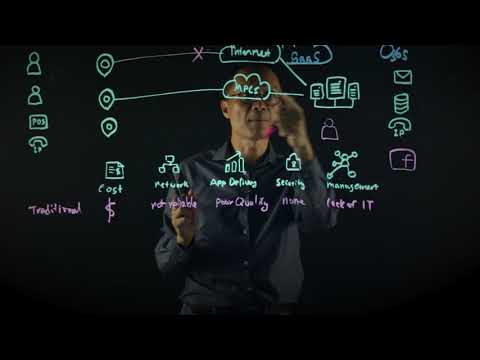

Enterprise WANs face two main areas of concern: connectivity and applications. With linkage, key issues include limited bandwidth, long network delays and severe packet loss. With applications, complications arise from transmission of large volumes of data and low transmission efficiency of the applications themselves (which were most likely designed for LANs) when operating across a WAN.
SANGFOR WAN optimization delivers multi-layer WAN optimization, improving the data transmission efficiency over physical links and significantly improving application responsiveness, especially in environments of high packet loss and high latency. Improvements are especially noticeable with applications that work very inefficiently over the WAN (such as Microsoft Exchange).
>SANGFOR WAN optimization uses signature-based stream caching, which can reduce redundant WAN data by as much as 30 to 90 percent. Its multi-layer optimization results in much speedier data transmission, avoiding or delaying expensive bandwidth upgrades, accelerating user traffic and ultimately delivering excellent ROI.
>After deploying SANGFOR WAN optimization solutions, enterprise headquarters, branch locations and partners can experience accelerated network performance of important applications and data, anywhere in the world. SANGFOR WAN optimization delivers a LAN-like experience over the enterprise WAN.
>For a more scalable, complete infrastructure acceleration solution, look no further than SANGFOR WAN optimization. The products can also leverage built-in VPN to provision an accelerated VPN service to support remote users with flexible and diversified virtual enterprise connectivity.
>SANGFOR is the first vendor in Asia to conceive of its innovative WAN optimization concept and offer real world solutions. The company has customers from a wide variety of industry segments who are enjoying the speed, security, reliability and cost-effectiveness ROI of WAN optimization.
| High speed | |
| Function | Description |
| Adaptive TCP proxy and HTP transmission protocol in high-latency, high-packet-loss network environments | |
| Supports multi-disk, bi-directional and fragment-packet acceleration | |
| Supports proxy for TCP, CIFS, HTTP, HTTPS, FTP, POP3/SMTP and MAPI protocols; supports acceleration of Web, HTTPS, FTP, Network Neighborhood, Lotus Notes, Exchange, SAP(B/S), SharePoint, Oracle Database and other applications | |
| Provides hardware-based GZIP and LZO high-speed stream compression algorithm | |
| Via WebPush function, conducts intelligent analysis of HTML request pages, to self-define settings for pre-fetching cache elements, and to improve Web application's accessing speed | |
| Flash link technology (improve data transmission speed) and addresses effects of high-packet-loss | |
| Sets QoS policy based on application, direction, source address, destination address and effective time, and supports QoS allocation based on lines | |
| Integrated with SANGFOR IAM bandwidth management feature: application identification, traffic shaping, etc. | |
| Security | |
| Function | Description |
| Built-in AES 128-bit encryption algorithm; enhance other encryption algorithms, guaranteeing data security | |
| Uses MD5 and SHA algorithms to guarantee data integrity | |
| Built-in Stateful Packet Inspection enterprise-level firewall provides packet filtering, URL filtering, access monitoring, DHCP services and other security functions | |
| Effectively prevents internal and external and internal DOS attack | |
| Usability | |
| Function | Description |
| Supports SNMP, the standard network administration protocol; Configuration wizards speed up user deployment; Auto identification of protocols based on contents, simplifying application acceleration configuration | |
| Functionality managed via various levels of access privileges, including Administrators and Users | |
| Provides visibility into a wide range of system information, including logs for alarms, errors and debugging. Allows use of stand-alone log servers, examination of real-time and historical traffic, analysis of accelerated and non-accelerated traffic and sessions, and report generation and export | |
| Data resilience via local and remote backup and recovery; Logs are backed up as files | |
| Restoring the original connection information after acceleration | |
| Supports import of WCCP V2 traffic, supports import of strategy routing PBR traffics, support CDP, and supports import of four-layer switch traffic; Default two directions acceleration on the whole network segment | |
| Scalability | |
| Function | Description |
| Built-in IPSec VPN module | |
| Supports acceleration effects via installation of PACC software on client PCs | |
| Supports hardware Bypass (Optional for low-end equipment) | |
| Leading technology |
SANGFOR WAN optimization greatly benefits the performance of Web, HTTPS, FTP, Network Neighborhood, Lotus Notes, Exchange, MS SQL, ERP, CRM and other business applications. Regardless of the physical location of branches and business partners, WAN optimization accelerates their important data and applications for a LAN-like experience across even a worldwide WAN.
|
| Low quality communications environments are accelerated the most |
Poor quality environments benefit the most with SANGFOR WAN optimization. Such environments are typically poor quality physical links, with high packet loss and high latency. They include satellite links, transnational links, and inter-operator connections. Certain applications (such as MS Exchange) will also greatly benefit from WAN optimization, which compensates for the applications’ original design to be used on LANs and not WANs.
|
| High ROI |
SANGFOR WAN optimization provides more scalable whole-network acceleration solutions with reasonable price. In addition to acceleration of existing lines, SANGFOR WAN optimization delivers an accelerated VPN infrastructure to connect remote users and sites with flexible and diversified accelerated connectivity by virtue of its built-in VPN service. For small branch sites, its software client can help reduce costs by providing accelerated connectivity via low-cost broadband solutions (instead of expensive leased lines). |
![]() |
KENWOOD–the Ideal Choice for Enhancing Informatization
As a leading audio brand established in 1946, KENWOOD is a Japanese enterprise specializing in the manufacture and sales of a range of cutting-edge products, including communication equipment, car electronics, and household electronics... |
![]() |
Mamee Applies the SANGFOR IAM, WANO, and SSL VPN Solution
Mamee-Double Decker's unique brand of high quality underscores the success they enjoyed today. Incorporated in 1971, Mamee began production a year later with a single product. The company is now listed on the main board of the Kuala Lumpur Stock Exchange, reflecting strong development over the years. Mamee-Double Decker received the Melaka Industry Promising Local Company Award in 2003, and was featured in the TOP 100 Listed Companies Year of 2005... |
![]() |
Deployment of SANGFOR WANO, IAM by Zaid Ibrahim
Zaid Ibrahim & Co (ZICO) is Malaysia’s leading regional law firm and one of the most highly regarded. The company is the first Asian law firm to receive a license from the Dubai International Financial Centre (DIFC), and the first to be granted a license to practice as registered foreign lawyers in Australia. ZICO is the first Malaysian legal firm with an associated Shariah advisory company, ZI Shariah Advisory Services Sdn Bhd (ZISHA) ... |
| |
|
|
| |
|
|
| |
|
|
| |
|
|
| WAN Optimization | ↑TOP |
WAN Optimization technologies address optimisation solution which turns out WAN experience into LAN. By optimising data layer, transport layer and application layer, provides customer whole new wide area network experience: avoid redundant data transmitting; adopt more stable, faster transmission protocol; improve application system work efficiency. Apart from this, WAN Optimization technologies offer whole new wide area network construction solutions to IT manager by reducing huge investment to lease lines, avoiding large scale network infrastructure implementation to help enterprises achieving the green IT.
SANGFOR Technologies adopted following technologies to help you achieving WAN Optimization |
|
| TCP Proxy | ↑TOP |
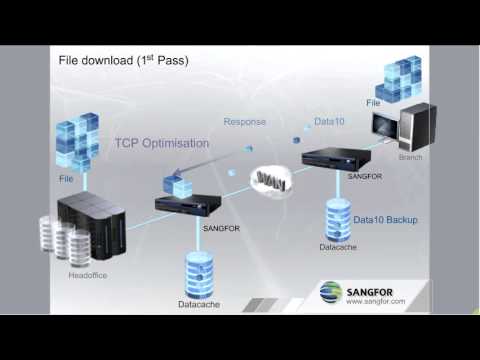
By deploying SANGFOR WAN Optimization appliance at each end through the wide area network, in the process of TCP connection, WAN Optimization appliance ‘monitoring’ the message of ‘ACK’ in traditional TCP handshake process and capture it. It turns the originally one segment TCP connection between client and server out into three segments of TCP connections. WAN Optimization appliance at client end acts as a server at client end while at the same time the other WAN Optimization appliance at server end acts as a client at server end, by means of this, the former three times TCP handshakes through wide area network turns out to be finished in local area network, highly improved TCP connection succeed ratio.
|
|
| Byte cache | ↑TOP |
SANGFOR originally designed ‘byte cache’ is able to cut redundant data at maximum extent during data transferring to improve bandwidth quality. When data pass through WAN Optimization appliance, it will be cut into data segments at 100-200B at the same time be allocated with a unique label (10B) to send to the peer end WAN Optimization appliance(storage data bases at both end of the WAN Optimization device are precisely matched ). In following transferring process, any data or file will be cut into data segments by WAN Optimization appliance and matched one by one with the current data segments. If match successfully, only the corresponding labels will be transferred the peer end WAN Optimization appliance and at the same time restore the labels into data segments. If match unsuccessful, both the data segment and label will be sent to the peer end WAN Optimization appliance to ensure the equality at each end of WAN Optimization appliance.
WAN Optimization appliance designates each segment a unique label, this label not only include corresponding data information but partial information of the neighbour data packet, in this caste, when a data packet loses, WAN Optimization appliance will restore the lost packet according to the label of neighbour data packet without re-transferring to improve transmission efficiency.
Byte cache has an ability to reduce data amount during transmission, such as: origin file is 10M at both sending end and receiving end, data amount may probably reduce to 100K after optimisation procedure by WAN Optimization appliance. It means user has extend his bandwidth logically by using WAN Optimization appliance while the actual bandwidth remains the same, but simultaneously the data amount has reduced to 1/10 even 1/100 compares to the original size which leads to the conclusion that the logical bandwidth has expand by 10-100 times. Not all the data can be optimised by byte cache in real network environment; data which can be optimised gets different effect as well. But user will experience bigger bandwidth throughput and much higher speed. |
|
| SNAT & DNAT | ↑TOP |
SNAT Due to special properties of certain protocols, server need to judge source address of data packet, if source address in received packet header different from source address encapsulated, the server will reject the corresponding request from this data packet. In this caste, we need WANO-S to restore source address into IP address (192.168.0.1) at client end. When data packet arrives at WANO-S, destination address will be restored to the original server address (172.16.0.1) but source address restore into original client end address (192.168.0.1) is optional. The benefit is: when it happens to unsymmetrical route, shut SNAT down, no matter data packet choose line A or line B, to server it’s WANO who forwarded it to server, in this caste we avoid the influence that unsymmetrical might cause.
DNAT Only if the data packets pass the DNAT process, it will be conducted to acceleration module of WANO-C by data packet detecting module in WANO-C, it will transmit through acceleration tunnel between two WANO appliances. |
|
| GZIP | ↑TOP |
GZIP compresses static files such as HTML, JavaScript, CSS and dynamic files as asp, aspx, php, jsp, etc. The biggest advantage of this compression algorithm is to speed up the access speed of browser at client end by reducing the data flow transmitted. |
|
| LZO | ↑TOP |
LZO is a compression algorithm which dedicated on speeding up decompression. It’s short for Lempel-Ziv-Oberhumer with following benefits: easy decompressing with high speed; no memory is needed; high speed compression; 64KB memory is needed during compression; adaptable of increasing compression rate in the cost of reducing compression speed while maintaining the decompression speed; generate compression level beforehand to secure a competitive compression ratio; another 8KB memory compression level is also available; the algorithm is thread-safe; the algorithm is lossless.
LZO compresses data block into matched data (sliding dictionary) and unmatched literal serials. LZO treats long matched data and long unmatched literal serials in a bespoke technology which has a distinctive effect on these kind of high redundant data and fair effect on incompressible data, LZO expands the input data block by 16 bytes per 1024 bytes in caste of processing the incompressible data to ensure the effect. |
|
| Web Push | ↑TOP |
Web Push is a specialized acceleration technology by pre-fetching the web objects in the branch end so that they can be fetched locally when client end needs to fetch these certain objects to speed up the http web accessing. |
|
| Dynamic IP addressing | ↑TOP |
When dynamic IP address at both end of VPN tunnel, traditional method will not work because of both ends cannot secure the IP address of each other. By using this technology, WAN Optimization devices will find the IP address at each other end dynamically and then set up VPN tunnel. |
|
| Multiplexing | ↑TOP |
Set up multiplex VPN tunnel with multiplex bandwidth and failover, for example: there are two internet lines at each end of the VPN device that established the tunnel, thus this tunnel can generate 2*2=4 VPN tunnels and guarantee the reliability and stability of VPN by certain algorithm. |
|
| Tunnel self-recovery | ↑TOP |
When VPN tunnel disconnected due to outages, the system will automatically discover the fail and reorganized the new VPN tunnel before network connection recovered to ensure the fluency of VPN tunnel. |
|
| QoS | ↑TOP |
Quality of Service (QoS) is a technology solution that overcomes the limitations of standard routing and enables you to tailor traffic routing according to your requirements. SANGFOR QoS provides the following benefits: Bandwidth guarantee: guarantee mission-critical applications minimum bandwidth which will support them, even in the event of encountering application like P2P, the bandwidth will remain at a certain level. If mission-critical applications were not in use or we didn’t guarantee the 100% occupation of the bandwidth, the rest bandwidth will be grabbed fairly by other applications, is this caste not only we guarantee the bandwidth requirement of mission-critical applications, but improve the whole bandwidth utilization ratio as well.
Bandwidth restraint: restrain non-mission-critical applications to spare more bandwidth to ensure the quality of mission-critical applications.
Priority setting: due to different application critical level, we set different priorities, when bandwidth congestion happens, the priorities valid. Bandwidth meets the application with the highest priority, same with the rest.
Bandwidth reservation: we reserve fixed bandwidth for certain special application and special IP, no matter reserved bandwidth in use or not, the other applications and IP cannot grab it. |
|
| ABOUT US | CONTACT US | ©2000- 2011 SANGFOR |