
On November 18, 2025, the world was reminded once again of how interconnected and fragile the modern internet can be. A major global outage at Cloudflare, one of the most widely used internet infrastructure providers, caused widespread service disruptions that affected social media, AI platforms, e-commerce, public transportation systems, and financial services. As organizations continue to migrate to “cloud-first” architectures and rely heavily on third-party platforms, events like this highlight the importance of resilience, redundancy, and visibility across the digital ecosystem.
What Happened?
At approximately 11:20 UTC, Cloudflare's network encountered significant failures to deliver core network traffic. The service disruption resulted in many major platforms, including X (previously known as Twitter) and ChatGPT, going down. Downdetector recorded more than 2.1 million issue reports during the outage. Over 435,000 originated in the United States, while the United Kingdom, Japan, and Germany were among the next most heavily impacted regions.
According to Cloudflare’s official incident report, the root cause was a configuration failure related to Bot Management feature file generation, triggered by a permissions change in its ClickHouse database system. The resulting oversized configuration files caused core proxy services to fail across multiple locations. Cloudflare CEO Matthew Prince said there was no evidence the outage was caused by a cyberattack.
Cloudflare deployed mitigation steps over the next several hours, including rolling back the faulty configuration and restarting affected services. By 14:30 UTC, Cloudflare reported that the main impact of the outage had been mitigated. By 17:06 UTC, all services had been fully restored.

Cloudflare Logo
Source: “Cloudflare apologises for outage which took down X and ChatGPT”, BBC, 19 Nov 2025
What is Cloudflare?
Cloudflare is a global CDN (Content Delivery Network) and cybersecurity company that provides a wide range of services, including website acceleration, security protections like DDoS mitigation, and content delivery optimization. Cloudflare’s infrastructure supports millions of websites, making it one of the most crucial players in the online ecosystem. It acts as a proxy between users and websites, ensuring speed, reliability, and security.
The Impact
The Cloudflare outage disrupted thousands of websites and services globally. Reports from The Independent indicated that several users reported issues like slow loading times or total downtime. Some of the most notable sites impacted included X/Twitter, ChatGPT, Spotify, McDonald’s, and banking/payment portals.
Brent Ellis, principal analyst at Forrester Research said Shopify suffered over USD 4 million in direct losses, with downstream merchant impacts potentially exceeding USD 170 million. When factoring in other major platforms, the total financial impact is estimated at over USD 250 million, while Cloudflare itself lost nearly USD 1.8 billion in market value during the incident. In the financial sector, Finance Magnates reported the outage wiped out nearly 1% of an average broker’s monthly trading revenue.
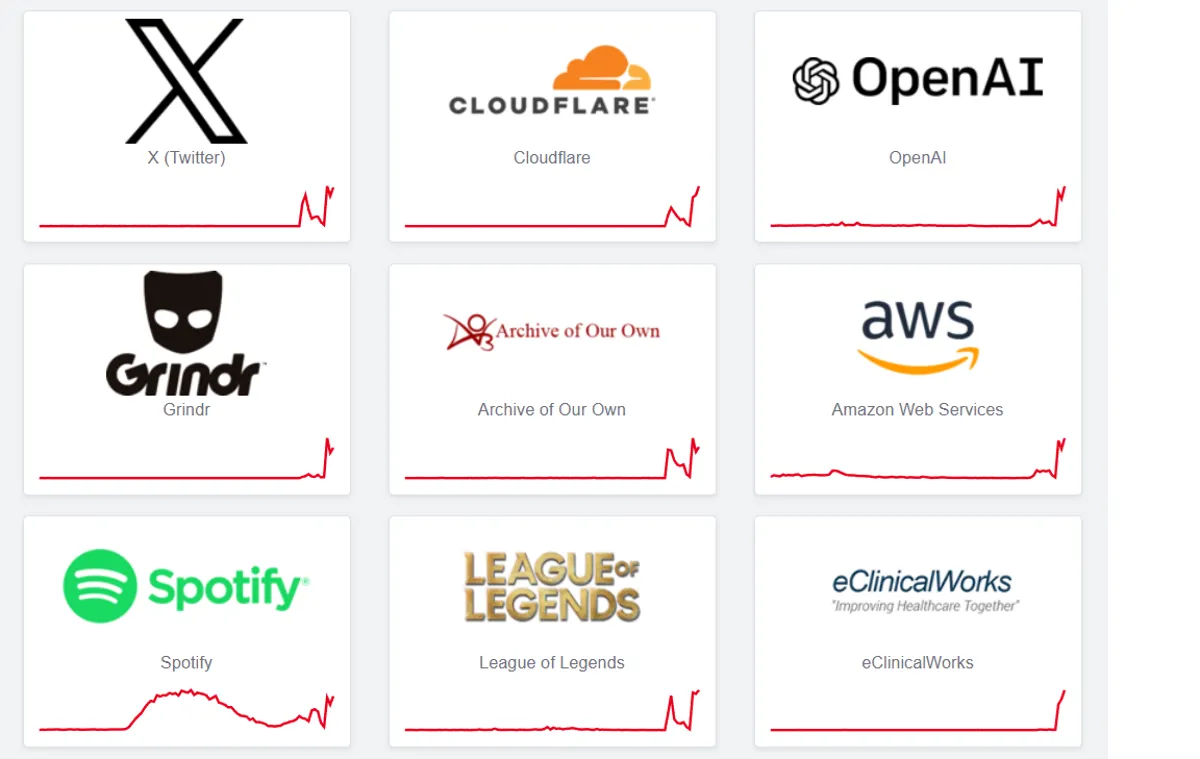
A sampling of the sites and services taken offline during the Cloudflare outage
Source: Downdetector, Screenshot by CNET, Nov 19, 2025
Lesson Learned
Similar outages happened earlier this year with Microsoft Azure and Amazon Web Services. All these platforms support many websites, so a single disruption affects millions of users.
The Cloudflare outage highlighted the systemic risks of relying on a single global network provider. Organizations are now re-evaluating their cloud strategies to strengthen resilience, autonomy, and compliance.
- Resilience Through SDDC
Enterprises are accelerating adoption of Software-Defined Data Center (SDDC) architectures to reduce blast radius and automate recovery during external outages. SDDC platforms provide policy-driven automation, micro-segmentation, and consistent governance, helping organizations maintain control even when third-party networks fail. - Reducing Shared-Fate with Hosted Private Cloud
The incident showed the need for predictable, isolated infrastructure for critical workloads. Hosted Private Cloud solutions such as Sangfor Subscription Cloud offer dedicated resources and custom SLAs, reducing exposure to multi-tenant disruptions or global misconfigurations. - Strengthening Compliance with Sovereign Cloud
Because global outages cross borders while regulations do not, more industries are turning to Sovereign Cloud strategies. With Sangfor Subscription Cloud also available in sovereign deployment, organizations can maintain jurisdictional control and meet data residency requirements, ensuring critical operations remain unaffected by global provider issues. - Multi-Layer Resilience
Ultimately, the outage demonstrates that resilience must extend beyond public cloud infrastructure. A hybrid approach, combining SDDC, Hosted Private Cloud, Sovereign Cloud, and public cloud creates diversified, autonomous architectures capable of withstanding failures across CDN, DNS, or edge networks.
Conclusion
While the Cloudflare outage of November 2025 was a wake-up call for many businesses, it also demonstrated the resilience of both the company and its users. The lessons learned from this incident underscore the importance of diversification in digital infrastructure and the need for robust disaster recovery plans. As we move forward, businesses must take proactive steps to safeguard against the risks of centralization and ensure they are prepared for any future disruptions.
Frequently Asked Questions
No. According to Cloudflare and its CEO Matthew Prince, there is no evidence that the outage was the result of a cyberattack.
It was triggered by a configuration error in Cloudflare’s Bot Management system. A permission change generated oversized files that caused proxy services to fail.
Downdetector received over 2.1 million outage reports. More than 435,000 reports were from the United States, while the United Kingdom, Japan, and Germany were also among the most heavily affected regions.
Several widely used platforms including X/Twitter, ChatGPT, Spotify, McDonald’s online services, and multiple banking/payment portals experienced slowdown or complete unavailability during the outage.
It shows that relying on a single global CDN or edge provider creates systemic risk — one configuration error can disrupt millions of services worldwide.
They can enhance resilience by adopting Software-Defined Data Center (SDDC) architectures for automated recovery and isolation, and by using Hosted Private Cloud or Sovereign Cloud models to reduce shared-fate risks and improve compliance.