
Summarize this blog article with AI:
 Ask ChatGPT
  Ask Grok
  Ask Perplexity
  Ask Claude
  Ask Google AI
 Modern technology has allowed us to streamline, optimize, and secure processes in a much more efficient and scalable way. Virtualization has been a core element in ensuring that process. Today, we'll be delving into the world of virtualization, specifically in relation to government sectors. We’ll be looking at why governments could benefit from virtualization, and how Sangfor solutions offer superior VMware migration opportunities for those entities. For now, let’s get started with a fundamental understanding of what virtualization is and how it works.
What Is Virtualization?
At its essence, virtualization is a process of creating multiple virtual environments on a single physical machine. This creates multiple Virtual Machines (VMs) which will then emulate the functions of physical hardware, typically servers, storage, and networks. A hypervisor is the software layer that controls and allocates physical resources such as CPU, memory, storage, and networking, allowing several VMs to have access to their own share of physical resources.
Virtualization is also the engine behind cloud computing services that help organizations manage infrastructure more efficiently. Generally, virtualization can be applied to different forms of infrastructure. These include virtualization for servers, storage, network, desktops, data, and applications. Ultimately, the type of virtualization you need will depend on your organization’s needs. The process is used to simplify operations, improve scalability, optimize resource usage, and elevate disaster recovery.
According to Fortune Business Insights, the global virtualization software market size is projected to grow to US$ 20.88 billion by 2034. Now that we have a firmer grasp of what virtualization is and how it works, let’s try to understand the concept from a government perspective.
Why Do Governments Need Virtualization?
Governments are priority sectors that require streamlined and efficient processing. These organizations often process, control, and secure critical and confidential information that could directly affect the safety, operations, and status of countries and regions. Naturally, government sectors need to implement the latest technologies to efficiently, securely, and effectively manage the large amounts of data they process each day. These are some of the more pointed benefits of virtualization for government entities:
- Increased Flexibility: Virtualization removes total reliance on physical servers and allows organizations to scale storage and resources as needed. Infrastructure is no longer limited to bulky physical servers and can be managed like an application online.
- Streamlined Automation: One of the main benefits of virtualization is optimized processing power and operations. A virtual system allows you to configure, deploy, and control infrastructure quickly, accurately, and without tedious manual configurations.
- Cost Efficiency: Government entities are often scrutinized for their funding allocations. Virtualization is a cost-effective solution that saves money on electricity usage, maintenance, and cooling systems. A virtual setup also requires less costly maintenance fees for hardware.
- Access Controls: A virtual environment makes it easier for government entities to share relevant information across the sector, improving transparency and collaborative efforts.
- Enhanced Security: For government entities, security should always be a priority when it comes to trusting new technologies. Fortunately, most modern virtualization software available today comes with inherent security protocols in place.
- Elevated Disaster Recovery: Governments are often the target of cyber-attacks due to their critical nature. Government agencies also need to be up and running quickly in the event of a natural disaster or blackout. Virtualization drastically improves disaster recovery processes and will have your system working within minutes.
When it comes to government organizations, virtualization is a key element in improving efficiency, security, and performance. Governments already face a barrage of escalating issues on a daily basis; their infrastructure should not be one of them. This is why Sangfor offers sustainable government solutions that cater to the sector’s needs specifically. These solutions focus on service continuity, user-friendly operations, a forward-thinking approach, and elevated security systems. Today, the virtualization industry is rife with opportunity, a fact that can mostly be attributed to the VMware acquisition in 2023.
Broadcom Acquisition Muddies the Waters
VMware is one of the biggest competitors and role models in the cloud computing industry. In 2023, VMware was acquired by Broadcom for approximately $61 billion. While the big move proved to be fruitful for Broadcom’s semiconductor company, concerns quickly rose about the changes in pricing, VMware licensing, and product complexity. Soon after the acquisition, customers began shifting away from VMware, citing drastic price hikes, mostly due to the shift to subscription-only models and large bundled packages.
However, Tom Fenton described the adverse reaction as much deeper than that, stating that “many felt the real damage wasn't to budgets, but to the foundational trust, talent, and ecosystem that made VMware a pillar in the industry.” Either way, VMware’s entire dynamic began to crumble under its own weight for a large bulk of its customers. These issues could be neatly summarized into:
- Licensing and Expenses: Shifting to a subscription licensing model and getting rid of perpetual licenses created unexpected price hikes for many VMware customers.
- Complexity: Traditional VMware environments often rely on multiple products and third-party tools, leading to operational complexity.
As a result of the move, users began frantically searching for VMware replacements on the market, prioritizing cost-effectiveness, performance, and simplicity. Even the government sector was not immune to the new line of VMware challenges. Last year, the Rijkswaterstaat (RWS), the executive arm of the Ministry of Infrastructure and Water Management in the Netherlands, accused VMware parent Broadcom of breaching its obligations when RWS tried and failed to extend a support agreement for its migration off the platform.
After using VMware's server virtualization platform for more than 15 years using perpetual licenses, RWS rejected a new subscription licensing scheme proposed after the acquisition took place, claiming that the new model would cost 85% more just to continue using the same software. The court ruled that Broadcom must provide the Dutch government organization with continued software support for at least two years while it manages a migration to an alternative platform, or face fines up to US$ 29 million.
As we’ve mentioned before, Sangfor has been one of the foremost VMware competitors that have risen from the ranks to ensure accessible virtualization solutions in the wake of this saga. As VMware migration became a hot topic, most organizations searched for alternatives that wouldn’t be as complex, expensive, and difficult, and Sangfor easily became a top contender with a complete and comprehensive guide to getting started on your virtualization journey, even now in 2026.
Sangfor As a VMware Alternative
Looking at an HCI vs. VMware comparison, it’s easy to see how Sangfor became a trusted platform in the list of VMware replacements. Sangfor has always been a strong contender in the cloud computing and cybersecurity sector, effortlessly creating solutions that speak to the needs of each customer. When it comes to being a VMware alternative, Sangfor offers strategic advantages, such as:
- Enhanced Licensing Flexibility: By using competitive and flexible license models that cater to both subscription and perpetual formats, Sangfor simplifies the process of virtualization.
- Extra Support and Resources: Migration to a new system can be difficult, which is why Sangfor provides extensive training and resources to facilitate a smoother transition for IT teams.
- Cost Efficiency: Sangfor prides itself on being accessible and budget-friendly, a bonus for government entities that try to cut back on unnecessary state expenditure.
- Customizable and Adaptable Services: Sangfor provides fully customizable and scalable solutions that adapt to your organization’s evolving needs and infrastructure demands.
- Regional Presence and Expertise: With a strong foothold in Asia and expanding global operations, Sangfor offers a level of localized support and understanding that is particularly valuable to governments and organizations in these regions.
*Please note that availability of licensing options may vary by region. To confirm the options available in your area, kindly contact your local Sangfor representative.
Sangfor aSV stands out as an ideal VMware vSphere alternative, effortlessly fitting into the role for governments and regular organizations alike. This is the core hypervisor behind our HCI, VDI, and cloud solutions, and ensures seamless integration across Sangfor’s full-stack cloud ecosystem with a flexible, scalable foundation for software-defined IT infrastructures.
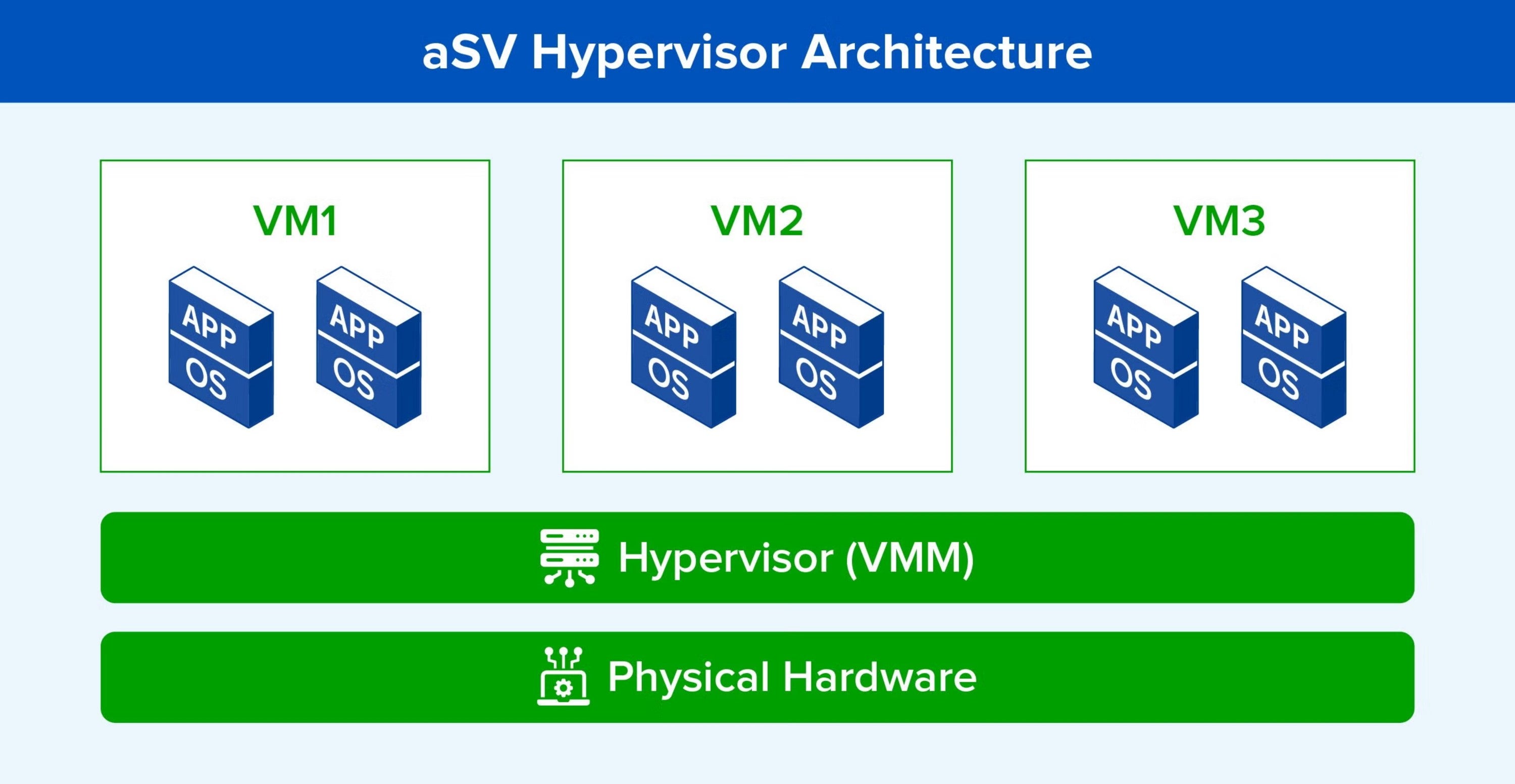
The Sangfor Hyperconverged Infrastructure (HCI) is our advanced virtualization software designed for modern IT infrastructures, providing seamless virtualization, high availability, and simplified management, along with being a full-stack replacement for virtualization, storage, networking, disaster recovery, and security, a conclusion based on Gartner Peer Reviews, G2 alternatives listings, and real-world deployments.
Sangfor’s HCI also provides the necessary requirements to operate a seamless sovereign cloud infrastructure that caters to cloud services specifically designed to comply with the data sovereignty laws of a particular country or region. For government entities, this is an indispensable asset that ensures that data is stored, processed, and managed securely within the borders of a single nation or jurisdiction.
For government entities, Sangfor represents superior virtualization capabilities that will ensure secure, scalable, and high-performance operations across every facet. To see those promises in real-time, let’s look at some of the government agencies already using Sangfor virtualization solutions.
Governments Using Sangfor Virtualization Solutions
Governments offer crucial services to the public and are responsible for maintaining, controlling, and protecting large amounts of complex data. This requires infrastructure that understands the importance of agility, security, and performance. Sangfor has gone above and beyond to ensure that every sector has access to innovative virtualization solutions that improve standards, secure data, and elevate general processing. Let’s see some of those promises in action for government entities today:
Sangfor HCI in Hong Kong
Following the radical changes brought about by the VMware acquisition and the implementation of the Protection of Critical Infrastructures (Computer Systems) Ordinance, Hong Kong government entities have turned to Sangfor’s HCI solution as a VMware replacement, maintaining the 17-year long standing in the country as a trusted cloud provider.
After a major government agency in Hong Kong, responsible for critical financial operations, experienced mounting challenges in maintaining its IT infrastructure, Sangfor’s HCI was implemented, leading to a lower Total Cost of Ownership (TCO), smooth VMware and security policy migration, and simplified management, all tied together under sovereignty and localization policy requirements.
Sangfor HCI in Malaysia
The Malaysian Ministry of Communications, Kementerian Komunikasi, also began to look for VMware alternatives that were easier to manage than their existing VMware 3-tier architecture. Faced with issues like legacy infrastructure, delayed support, and complex management, the ministry turned to Sangfor HCI for help.
We then deployed three Sangfor HCI units to replace the majority of the organization’s workloads that were running on VMware using a comprehensive migration plan. As a result, the Ministry achieved 40% cost-savings compared to continuing their investments with VMware, a seamless migration, and simplified management and native security, along with dedicated support from readily available Sangfor experts.
Choosing Sangfor for Government Virtualization
Governments are often considered the backbone of our society. These organizations exist to help the general public, provide critical services, and constantly manage evolving state tasks. This is no easy feat, and Sangfor recognizes that government organizations need to thoughtfully evaluate how virtualization infrastructure can best align with their evolving operational and security requirements. In the wake of the VMware acquisition, it has never been more prudent for governments and their organizations to rely on trusted virtualization solutions, and Sangfor is ready to answer that call.
Frequently Asked Questions
Many governments are reconsidering VMware due to higher costs, the shift to subscription-only licensing, and increased operational complexity after the Broadcom acquisition.
Sangfor provides flexible licensing (subscription and perpetual), lower total cost of ownership, simplified management, and integrated security, making it easier for government IT teams to operate.
Sangfor HCI integrates compute, storage, networking, and security into a single platform, reducing the need for multiple tools and simplifying daily operations.
Yes, Sangfor supports sovereign cloud infrastructure, ensuring that government data can be stored and managed within national or regional boundaries.