
Summarize this news article with AI:
 Ask ChatGPT
 Ask Grok
 Ask Perplexity
 Ask Claude
 Ask Google AI
The 2026 APEC Digital Week took place from July 16 to 29 in Chengdu, Sichuan, gathering representatives from government, enterprise, and academia across APEC member economies to engage in deep exchanges on cutting-edge topics such as the digital economy and artificial intelligence.
As an attending enterprise representative, Sangfor deeply participated in the series of events during this APEC Digital Week, sharing industry insights on frontier issues including the sustainable development of the AI industry, agentic AI security governance, and inclusive AI collaboration in the Asia-Pacific region. At the event site, Sangfor set up a themed exhibition area to showcase its technical achievements in the fields of AI security and AI infrastructure, sharing actionable enterprise digital and intelligent transformation practice solutions that balance both security and efficiency with attending guests.
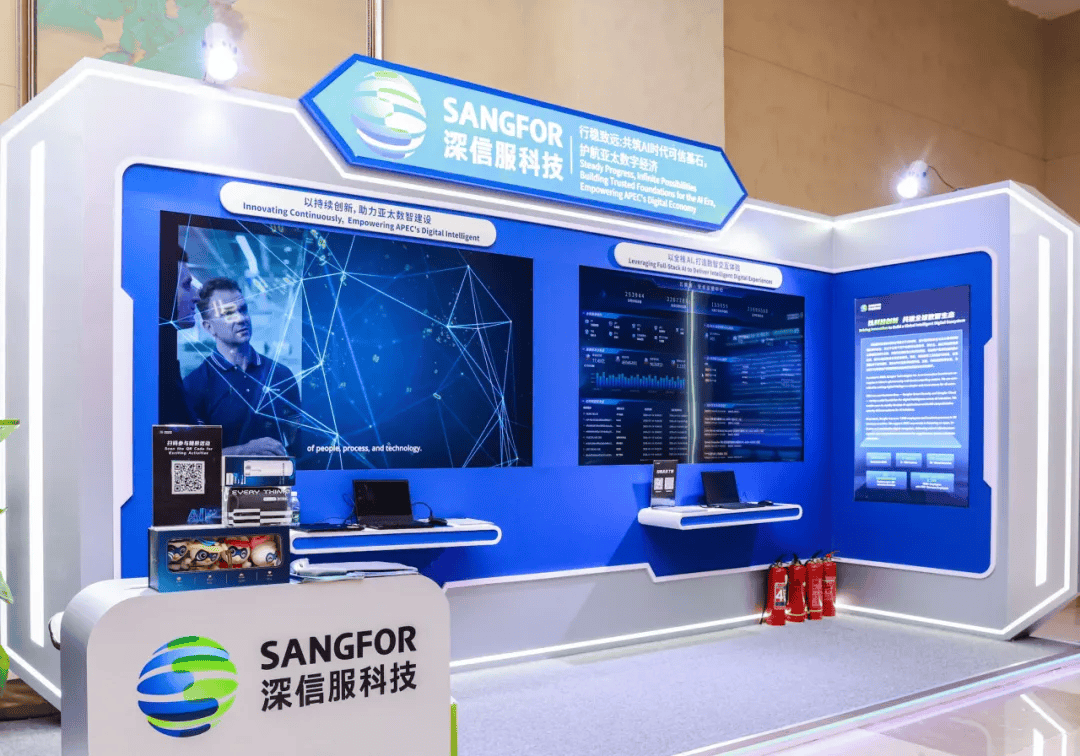
An Enterprise’s Core AI Assets Lie in Data, Processes, and Governance
At the APEC High-Level Dialogue on Digital and Intelligent Empowerment, He Zhaoxi (River He), Chairman of Sangfor Technologies, delivered a keynote address titled "You Don’t Need a Foundation Model to Have an AI Competitive Edge," sharing key industry insights focused on AI security and sustainable industrial development.
He noted that the focus of AI value creation is shifting from model capabilities to actual business outcomes. As foundation models become increasingly open and replaceable, enterprises do not need to reinvent the AI "engine." Instead, the real key is integrating external models into local business systems to cultivate proprietary capabilities and build a self-sustaining productivity flywheel. In his view, an enterprise's long-term AI competitiveness does not depend on owning an exclusive foundation model; rather, its core strength rests on four organization-specific assets: data semantics, business processes, trusted governance, and closed-loop learning.
He also pointed out that deploying production-grade AI requires a trusted operational layer. This layer empowers enterprises to freely choose models while centrally managing data security, permissions, auditing, cost, and system stability.
Addressing the path to industry adoption, he highlighted that—leveraging long-standing expertise in cybersecurity, cloud computing, and infrastructure—the industry can build foundational support across three dimensions: using AI safely, running AI reliably, and driving continuous business value. By utilizing capabilities such as AI compute gateways, AI security guardrails, and AI agent builder tools, enterprises can bridge generic models with local industry scenarios. This enables them to share the fruits of global AI technology while retaining local industry knowledge, providing a secure and controllable foundation to help APEC economies achieve inclusive and orderly AI development.
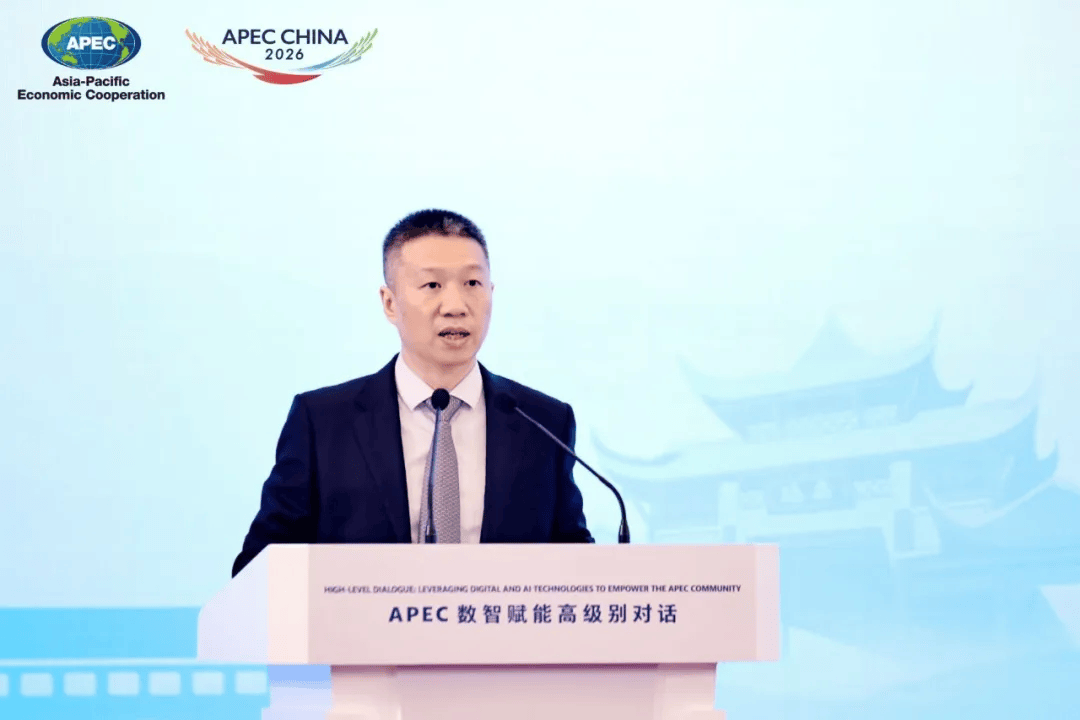
He Zhaoxi (River He), Chairman of Sangfor Technologies
In addition, He Zhaoxi (River He) participated in the roundtable discussion at the APEC High-Level Forum on Artificial Intelligence, sharing practical implementation ideas around three major topics: AI-enabled economic growth, safe and trustworthy AI governance, and regional inclusive cooperation. He further emphasized the importance of AI security and called on the industry to practice "using AI to protect AI," implementing full-process audit and control over the identity, permissions, and behavior of AI agents. Illustrating the dialectical relationship between security and innovation, he noted: "Brakes are not placed on a car to make it stop, but to give the driver the confidence to go faster. Only when AI security is built on a solid foundation can AI innovation develop even faster."
The AI Governance Paradigm Urgently Needs Reconstruction
Jeremy Jia, President of International Market Division at Sangfor Technologies, shared insights during the seminar on "New Concepts and New Approaches for the APEC AI Literacy Enhancement Initiative." He stated that as AI agents gradually evolve into digital employees capable of executing tasks autonomously, traditional protection models that rely solely on content filtering for large models are no longer sustainable, creating an urgent need to reconstruct the AI governance paradigm.
Jeremy Jia proposed that organizations need to build a comprehensive "safety braking" mechanism for AI agents, standardizing their operations with the same mindset used to manage digital employees: matching appropriate permissions through security assessments, defining operational boundaries based on the principle of least privilege, and achieving dynamic supervision through full-link behavioral auditing. At the same time, organizations should deploy full-link AI security guardrails to monitor input and output content, continuously verify operational logic, and establish circuit-breaker mechanisms to freeze permissions in a timely manner whenever agents exhibit unauthorized or anomalous behavior.
He emphasized that this mechanism is not meant to limit AI capabilities, but rather to install brakes against out-of-control risks. Currently, AI agents are ushering in a new wave of productivity leaps, yet controllability remains an insurmountable prerequisite for large-scale implementation. All parties should strive to find a practical, scalable, and trustworthy balance between AI development efficiency and security risks.
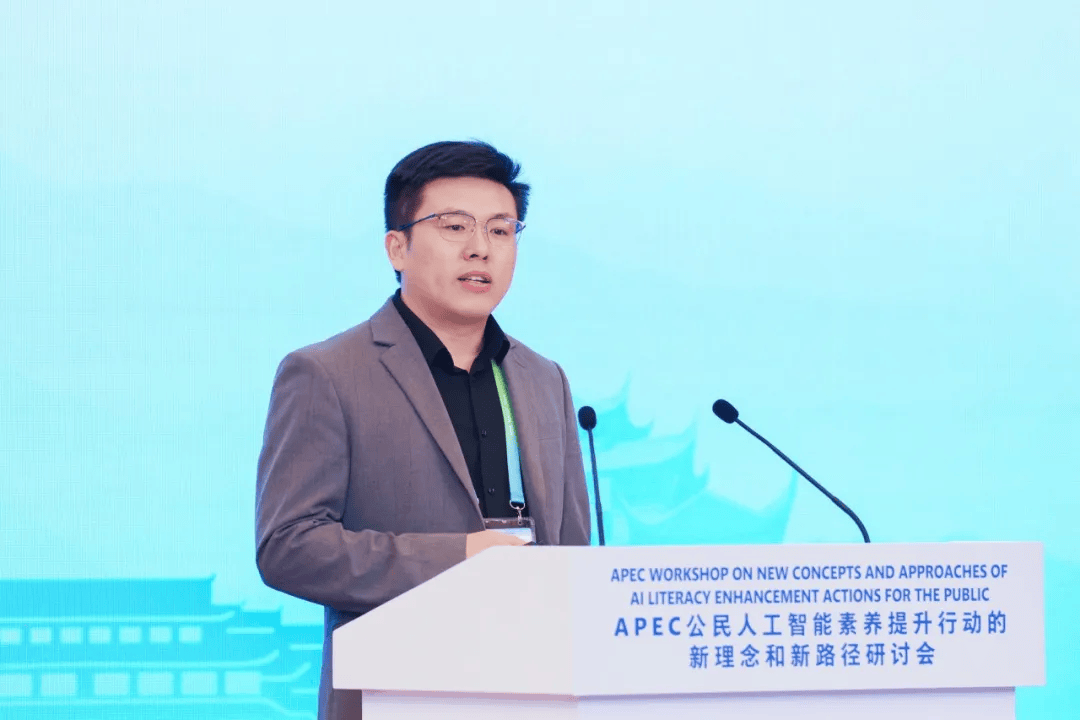
Jeremy Jia, President of International Market Division at Sangfor Technologies
AI Attacks Have Become Industrialized Security Operations Must Upgrade
At the APEC Telecommunications Working Group Seminar themed "Promoting the Safe Development of Artificial Intelligence to Achieve APEC Economic Growth," Witt Lin, Head of Security Solutions at Sangfor Technologies, delivered a keynote speech focusing on cybersecurity challenges and governance strategies in the AI era. He pointed out that current AI-driven cyberattacks have become industrialized, autonomous, and lightning-fast, making traditional security models inadequate. The industry must shift its mindset to build "AI-led, human-supervised" autonomous security operations, relying on AI's native capabilities to offset security pressures.
As AI agents evolve into "digital employees," the focus of governance should shift from solely managing AIGC content risks to a dual control mechanism of "content security + behavioral security," staying vigilant against model permission escalation and out-of-control behavior. He emphasized that security control is the primary prerequisite for enterprises applying generative AI. The industry should establish a "semantic compliance + behavioral monitoring" mechanism accompanied by circuit-breaker capabilities, achieving full-process risk control over AI applications and interaction data.
Finally, he concluded that only by simultaneously strengthening the twin capabilities of "AI offensive and defensive protection" and "AI full-lifecycle governance"—thereby balancing development efficiency with the security baseline—can we drive the sustainable development of the AI industry across the APEC region.
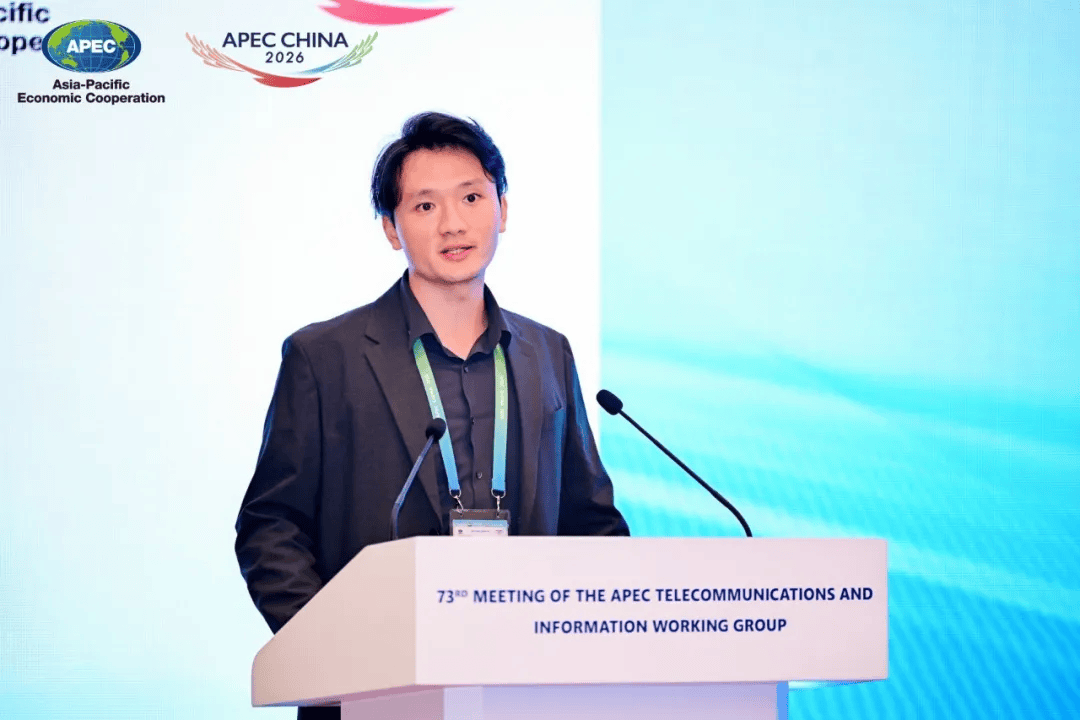
Witt Lin, Head of Security Solutions at Sangfor Technologies
Sangfor Solution Selected for the Case Studies of Digital and AI Empowerment in Asia-Pacific Region
During this APEC High-Level Dialogue on Digital and Intelligent Empowerment, the Case Studies of Digital and AI Empowerment in Asia-Pacific Region was officially released, and the "Sangfor Managed Detection and Response (MDR) Solution" was successfully selected. Leveraging global Security Operations Centers (SOCs) and Sangfor's advanced AI capabilities, the solution provides enterprise users with 24/7 managed threat detection and response services. Simultaneously, it meets core requirements for low-latency operations, local compliance, and localized service adaptation, helping enterprises effectively respond to cybersecurity threats without needing to build their own security operations teams.
Standing at the important milestone of the 2026 APEC "China Year," Sangfor—with the responsibility of a pioneer in the digital and intelligent wave—is committed to actively championing the principle of "open win-win, secure and controllable," injecting a force of both resilience and warmth into regional collaborative development. In the future, we will continue to solidify a trustworthy and secure digital and intelligent foundation, clear the "last mile" of production-grade AI deployment, work alongside our Asia-Pacific partners to bridge the intelligence divide, and ensure that the innovative momentum of AI truly empowers all industries.