
Summarize this success story article with AI:
 Ask ChatGPT
 Ask Grok
 Ask Perplexity
 Ask Claude
 Ask Google AI
Executive Summary
Customer: Unika Atma Jaya (Atma Jaya Catholic University of Indonesia)
Industry: Education
Challenges:
- Siloed tools led to complex management & unresolved alerts
- Delayed investigation & response
Sangfor Solution:
- Sangfor Athena XDR (SaaS model) – unified SecOps platform
- Sangfor Athena EPP – AV/EDR replacement and Athena XDR’s endpoint sensor
- Sangfor Athena STA – network sensor with Network Traffic Analysis (NTA)
1. About Universitas Katolik Indonesia Atma Jaya
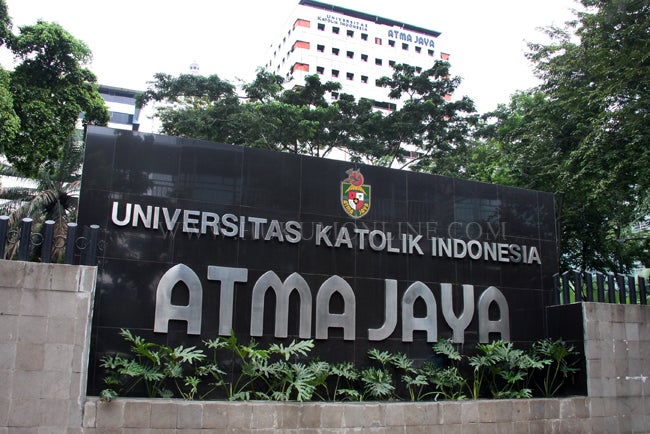
Universitas Katolik Indonesia Atma Jaya (Unika Atma Jaya, Atma Jaya Catholic University of Indonesia) is a private university founded in 1960, operating three campuses across the Jakarta metropolitan area: Semanggi, Pluit, and BSD. The institution serves over 10,000 students and employs more than 455 faculty members across a mix of academic and clinical environments, including a teaching hospital at the Pluit campus.
This multi-campus ecosystem relies heavily on digital infrastructure that supports teaching, research, administration, campus services, and healthcare operations. With large user populations, sensitive academic and clinical data, and growing research activity, Atma Jaya maintains a broad and evolving digital footprint.
These characteristics create a complex cybersecurity landscape, making Atma Jaya an ideal example of how a mid-sized higher-education institution strengthens its security posture, improves detection and response, and modernizes its SecOps capabilities through the adoption of XDR (Extended Detection and Response).
2. Customer Pain Points
| Pain Points | Details |
| 1. Siloed tools led to complex management and unresolved alerts | Atma Jaya previously relied on their existing third-party AV/EDR and NGFW as their main security tools. They operated in isolation with no centralized SecOps platform. As a result, the IT team received alerts from multiple systems but could not easily understand how they were related or which ones should be prioritized. Ultimately, this overload made alerts difficult to manage, and some were left unresolved, leaving potential threats hidden in the noise. |
| 2. Delayed investigation and response | The existing IT team lacked the bandwidth required to handle security threats effectively. Without the required time or automated tools, essential tasks such as log review, alert validation, and incident investigation took nearly an entire workday to complete. The university needed a simple, user-friendly solution that could help them interpret threats clearly and ensure critical incidents were fully resolved. |
3. Sangfor Solution
In early 2024, Atma Jaya learned of the newly released Sangfor Athena XDR, a unified, AI-driven SecOps platform designed to simplify daily operations. Athena XDR consolidates incident detection, automated response, threat hunting, lightweight SIEM, ticketing, and reporting into a single, seamless console, which can fulfil customer requirements for a unified platform with automated response capabilities. In addition, Atma Jaya adopted Sangfor Athena EPP (Endpoint Protection Platform) and Sangfor Athena STA sensor as part of a cost-effective package, providing high-quality native telemetry, proactive endpoint protection, and enhanced threat visibility across the network.
Before that, Atma Jaya had conducted POCs with other XDR vendors. They found three major issues:
(1) Third-party integration openness: The above products offer limited flexibility for third-party integration, relying instead on their own ecosystems, such as their EDR and firewall, to deliver the best experience.
(2) Operational Complexity: The platforms and documentation were too sophisticated for the current IT team.
(3) High upfront investment: The university wished to adopt a simple and user-friendly platform to establish an SOC within its limited budget.
Solution Implemented:
| Components |
|
| Implementation Year |
| 2025 |
| Scope |
| Full asset management across the university and its affiliated teaching hospital |
| Key Capabilities |
|
With Athena XDR, Atma Jaya successfully empowered its SOC and enhanced its security posture seamlessly without disrupting daily SecOps tasks and achieved this within its budget.
4. Benefits & Results
| Pain Points | Before Athena XDR | After Athena XDR |
| 1. Siloed tools led to complex management and unresolved alerts | No centralized SecOps platform, leading to fragmented visibility and many alerts without context. | Centralized Visibility and Noise Reduction (~200 Alerts per day): Athena XDR integrates with Athena EPP, Athena STA, and Atma Jaya’s existing third-party NGFW, ingesting large volumes of telemetry data and correlating them within seconds. Athena XDR efficiently processes and analyzes around 1 GB of NGFW logs per day. This provides centralized visibility and unified protection across all assets. With integrated Security GPT, Athena XDR adds contextual analysis, automatically correlating alerts across the tool stack to accurately identify security incidents. This has helped reduce noise to approximately 200 high-confidence alerts per day, including anomalous traffic, malware activity, and malicious domain detections—fully analyzed and categorized by severity. Through a user-friendly portal, administrators can classify critical assets into groups such as student privacy data or internal network systems, allowing IT staff and the platform to prioritize protection based on asset importance. |
| 2. Delayed investigation and response | IT staff lacked the time and automated tools to investigate threats efficiently, slowing incident response. | 30% improvement in operational efficiency with GenAI-enablement:Security GPT acts as a 24/7 virtual Tier-2 analyst, automatically validating alerts and presenting clear, plain-language reports that help IT staff quickly understand each incident and its impact. With predefined automated response playbooks, the team can immediately execute the appropriate containment steps — without needing deep security expertise — ensuring threats are controlled quickly and consistently. Security GPT then guides deeper investigation, providing supporting evidence, root cause insights, and recommended actions. This enables the team not only to respond, but to complete full remediation confidently. Together, this process ensures threats are fully resolved without the risk of recurrence, while reducing manual workload. Routine SecOps tasks that once took almost a full day are now completed within hours, resulting in a 30% increase in operational efficiency. |
Customer Testimonial
“Sangfor Athena XDR is a powerful, AI-driven security platform that unifies SIEM, SOAR, and threat intelligence into one seamless solution, reducing complexity for our security team. It provides complete visibility across our attack surface, while Athena’s XDR AI collects and analyzes data in real time, uncovers hidden patterns, and helps us respond faster and more efficiently.”
Andre Zenik, SOC Team Leader, Universitas Katolik Indonesia Atma Jaya
5. Looking Ahead
After learning that Sangfor Athena XDR also provides Email Protection and Cloud Protection, the university expressed strong interest in expanding its current deployment. Given their trust in the existing solution and its effectiveness, they indicated that they hope to increase their SaaS XDR license capacity in the future to support a more comprehensive security architecture.
Their long-term vision is to build an integrated Security Operations Center (SOC) that unifies both cloud and on-premises environments, enabling consistent threat detection, response, and governance across their entire hybrid infrastructure.