
Summarize this blog article with AI:
 Ask ChatGPT
 Ask Grok
 Ask Perplexity
 Ask Claude
 Ask Google AI
In enterprise security, Server Message Block (SMB) file shares remain among the highest-value targets for ransomware attacks. SMB is the standard protocol used in Windows environments to provide shared access to files, folders, and other network resources. Because these shares host critical business documents and departmental file stores, compromising them allows attackers to disrupt hundreds of users simultaneously—a tactic designed to inflict maximum operational paralysis.
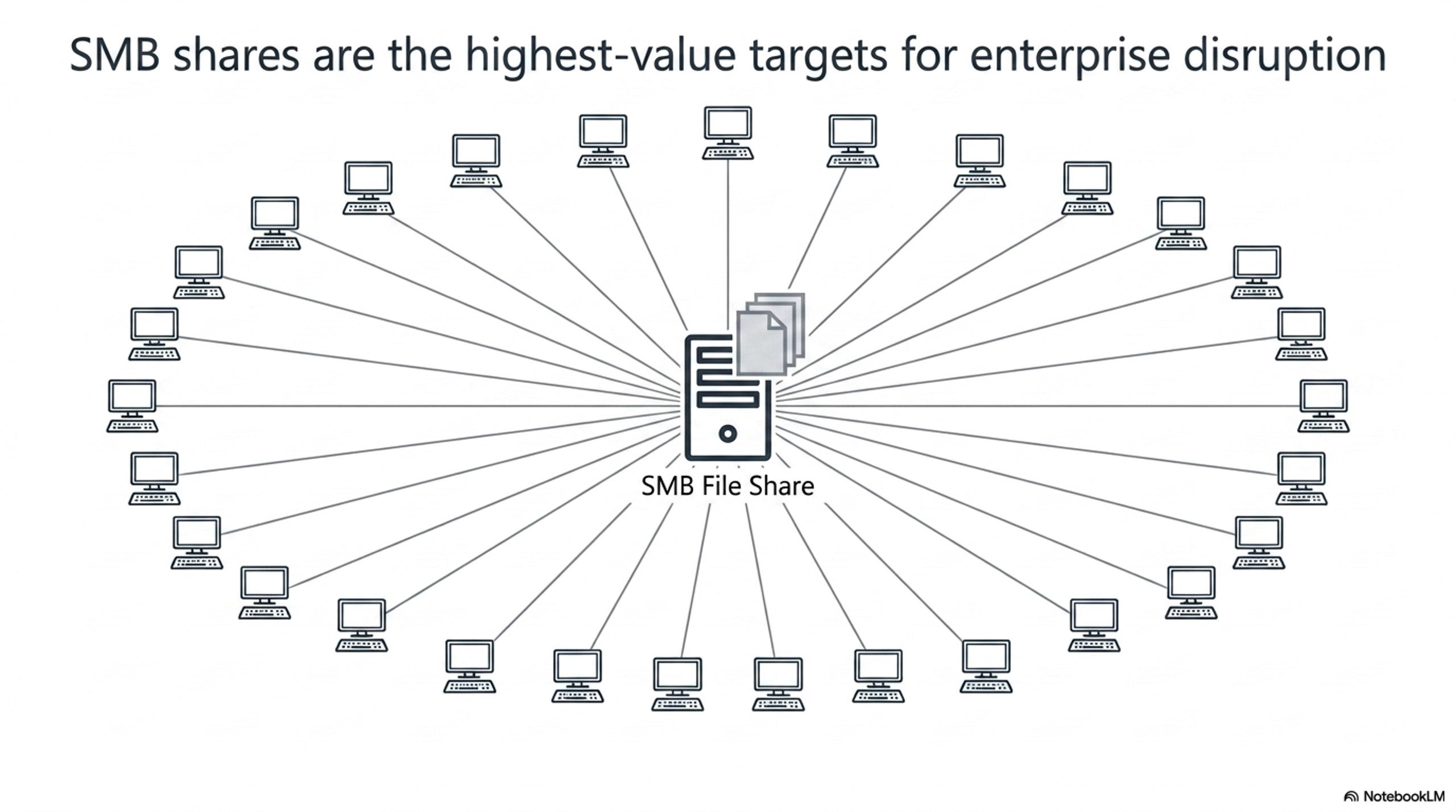
Yet, many IT and security teams face an unsettling reality: even after deploying endpoint detection and response (EDR) on file servers, documents in shared directories can still be encrypted overnight. This does not necessarily mean protection has failed. More often, attackers are exploiting a structural blind spot in traditional EDR architecture: ransomware encryption that takes place remotely from a compromised endpoint rather than on the SMB file server itself.
This article explains how SMB-based Remote Ransomware Protection works, why conventional endpoint protection struggles to stop it, and how Sangfor Athena EPP closes the gap with a three-layer defense model.
Why Remote SMB Encryption Bypasses Traditional EDR
Most traditional endpoint security tools, including EDR, are designed around one core assumption: ransomware behavior originates from a malicious process running on the protected machine. That model works well when ransomware executes locally on a server or workstation, allowing the security agent to monitor process behavior, API calls, file operations, encryption patterns, and suspicious command execution.
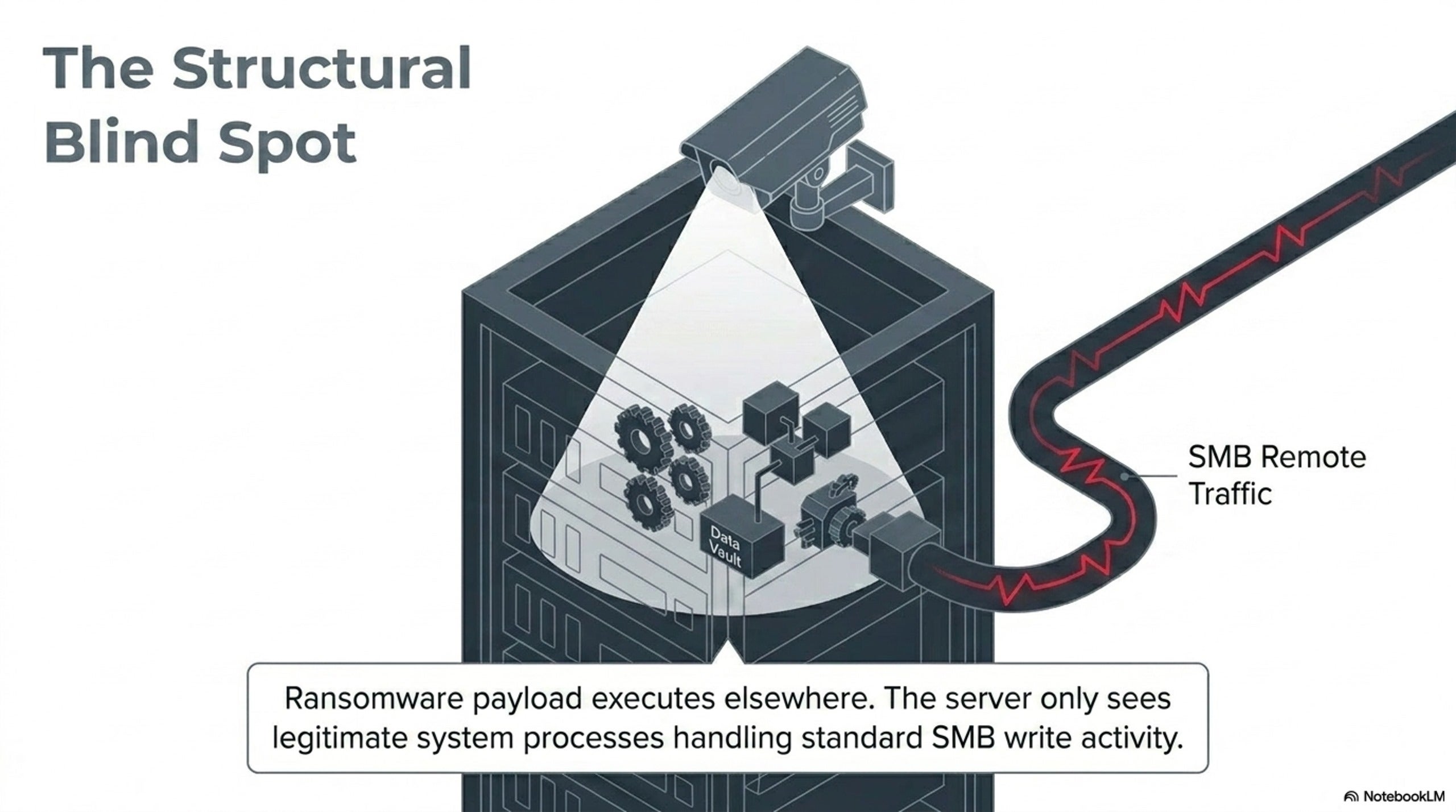
But remote SMB encryption follows a completely different playbook. A typical attack executes in three distinct phases:
- An endpoint is compromised: The attacker gains control of a vulnerable, unmanaged endpoint inside the network, such as a contractor laptop or BYOD device.
- Legitimate SMB access is abused: The attacker uses valid credentials or the compromised user’s existing access rights to mount network shares and access files over SMB.
- Files are encrypted remotely: The ransomware reads files from the share, encrypts them locally on the compromised endpoint, and writes the encrypted versions back to the server.
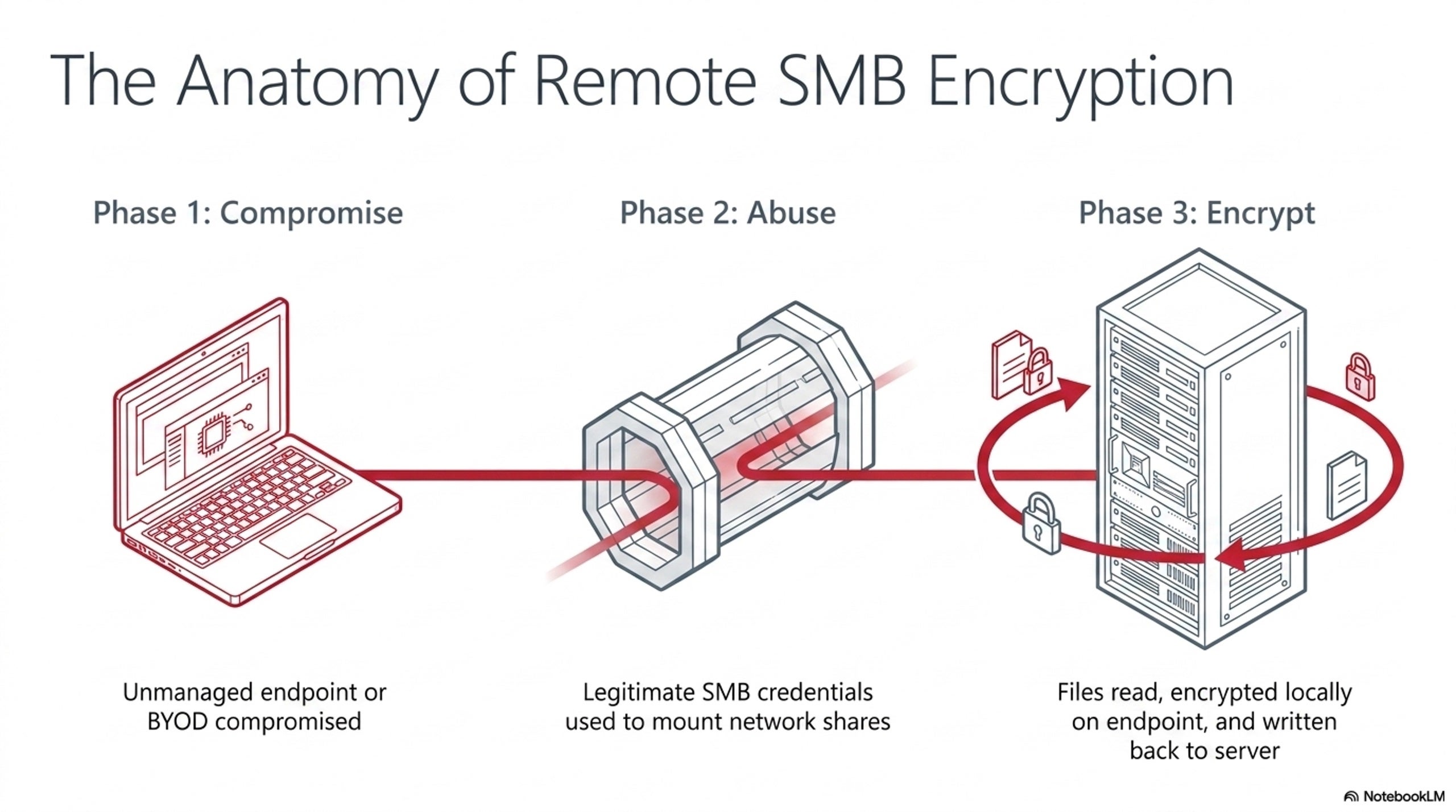
From the file server’s perspective, there is no malicious executable running locally, no ransomware process, no suspicious local API chain, and no obvious malware payload to inspect. Instead, the server merely sees high-volume SMB write activity handled by normal Windows system components, including the standard System process and the SMB server driver, srv2.sys.
Because process-centric detection alone is blind to this vector, security teams require deep behavioral visibility at the SMB file-access layer.
Sangfor Athena EPP’s Approach: From Process Monitoring to Behavioral Detection
Sangfor Athena EPP (Endpoint Protection Platform) shifts the focus of defense directly to where the malicious activity impacts the business: the SMB file-share layer. Rather than relying strictly on local endpoint process inspection, Athena EPP monitors file operations inside protected shares, including opens, writes, renames, deletes, and overwrites. This allows the platform to detect definitive ransomware behavior, even when the underlying encryption process is executing on a completely separate, unmanaged machine.
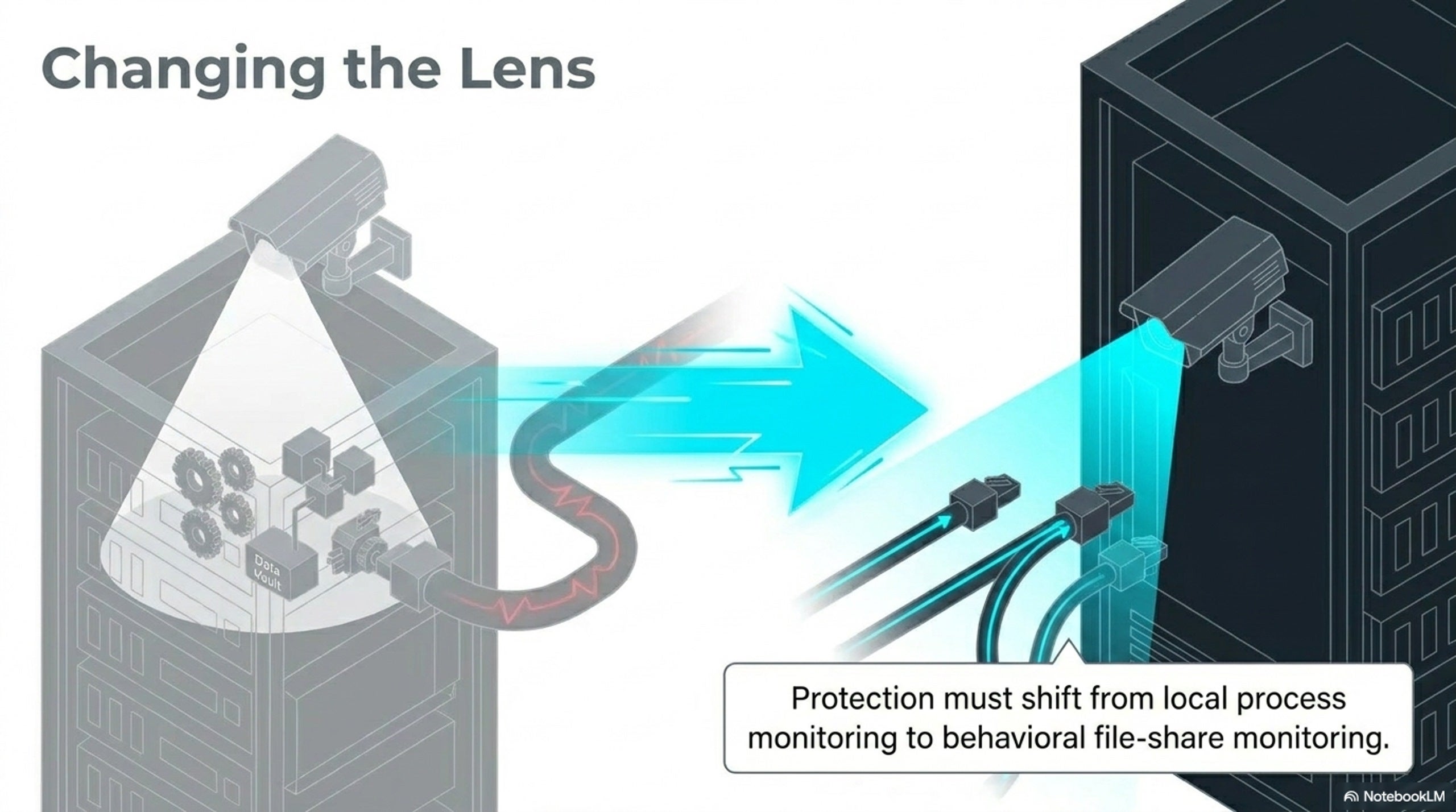
Athena EPP’s SMB-based Remote Ransomware Protection is built around a rigorous three-layer defense model:
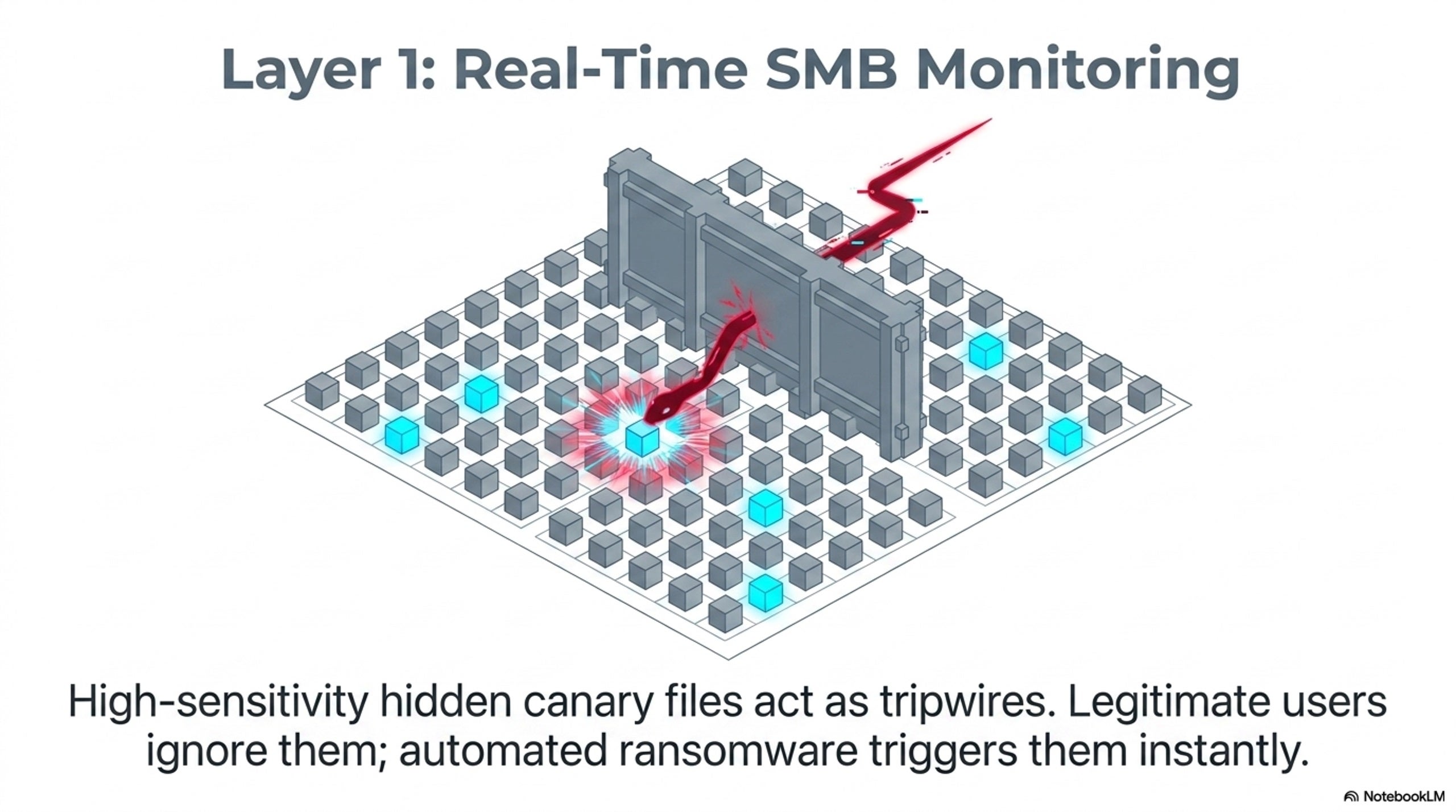
Layer 1: Real-Time SMB File-Activity Monitoring
Athena EPP continuously monitors file operations across protected SMB shared directories, tracking reads, writes, renames, and high-frequency modification patterns. Crucially, it deploys hidden canary files (bait files) in key directories to act as high-sensitivity tripwires. Because legitimate users have no reason to interact with these files during routine work, any ransomware scanning and encrypting the folder will inadvertently trigger them. The moment a bait file is accessed or altered, Athena EPP instantly escalates its analysis of all surrounding network file activity.
Layer 2: Behavior-Based Ransomware Detection
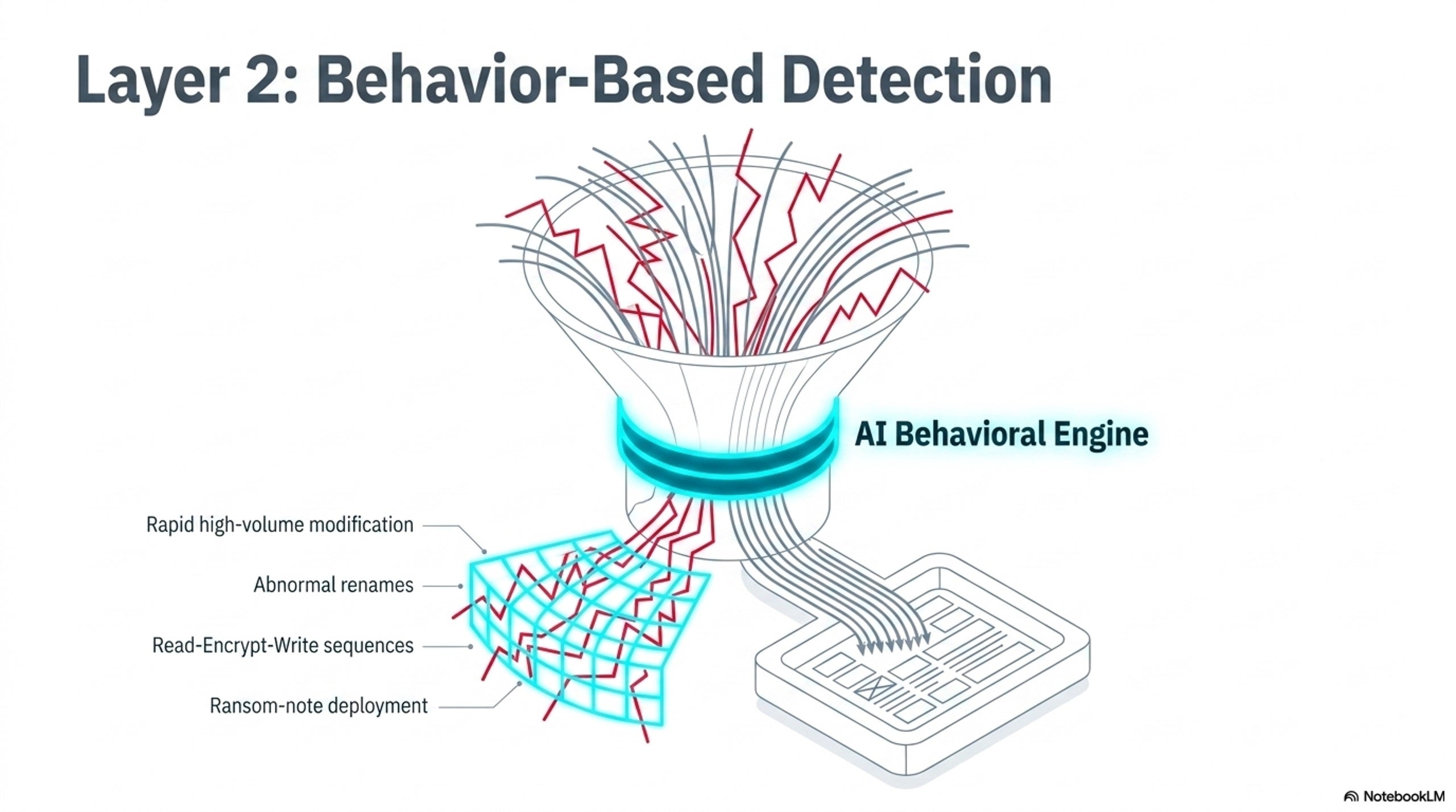
A single file change is not enough to declare an attack; business users naturally open, edit, save, and rename files all day. To prevent false positives, Athena EPP’s AI-powered behavioral detection engine evaluates file activity in full context, analyzing specific attack indicators such as:
- Suspicious read-encrypt-write technical patterns;
- Ransom-note file deployment indicators;
- Remote SMB sessions that mathematically mirror an encryption sequence.
These activities allow Athena EPP to make a high-confidence distinction between ordinary business operations and active ransomware attempting to destroy shared data at scale.
Layer 3: Immediate Network-Layer Containment
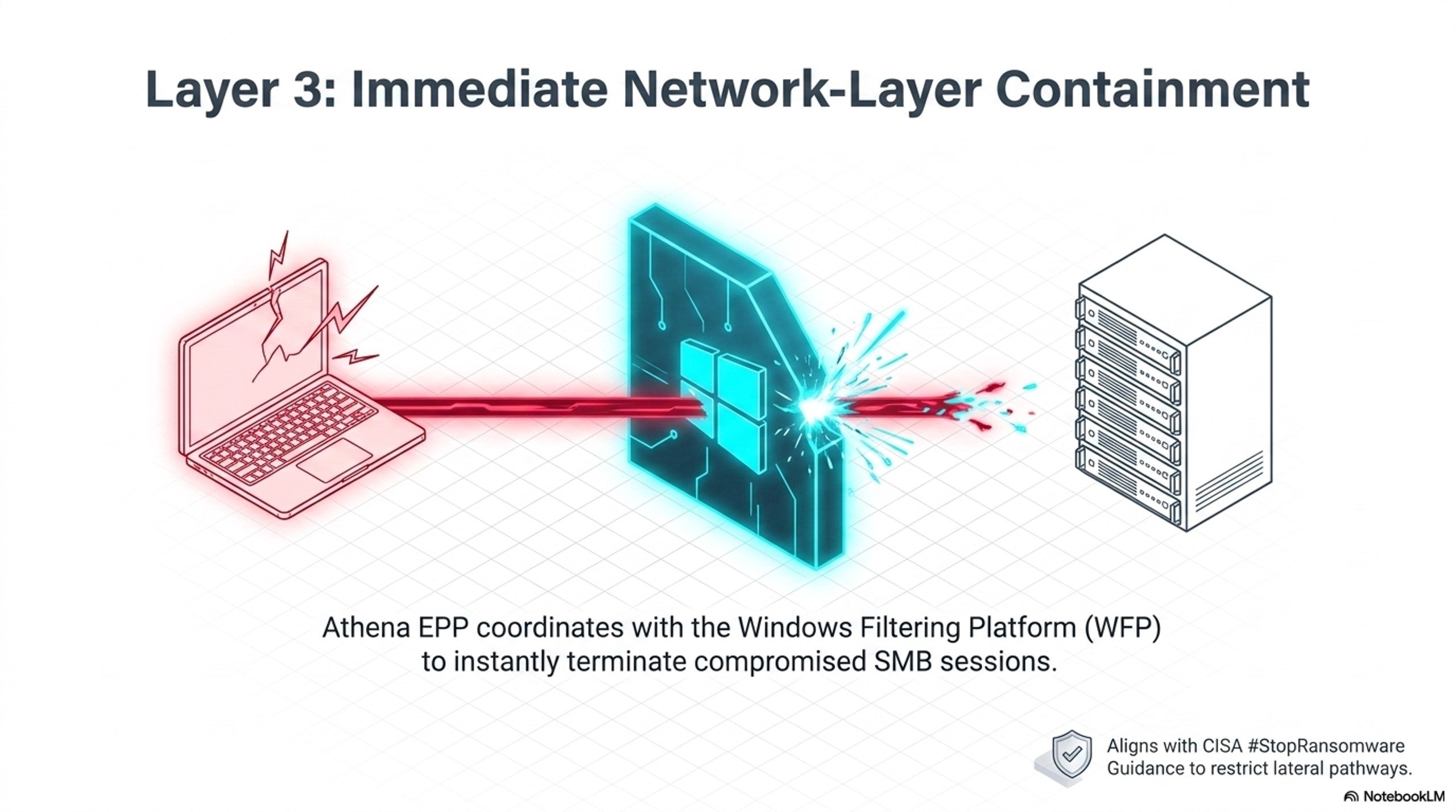
Once Athena EPP identifies an active remote encryption sequence, it bypasses passive alerting. It immediately coordinates with the Windows Filtering Platform (WFP) to terminate the compromised SMB session and block the source connection. This instantly cuts off the attack path between the compromised endpoint and the file server before encryption can spread.
Compliance Note: This precise isolation capability aligns directly with globally recognized cybersecurity frameworks, including the CISA #StopRansomware Guidance and international best practices, which explicitly mandate restricting internal workstation-to-workstation SMB traffic to block lateral movement pathways.
See Athena EPP’s SMB-based Remote Ransomware Protection in Action
Customer Outcomes: A Major Improvement in SMB Ransomware Defense
Athena EPP improves SMB ransomware defense in four practical ways:
- The attack source becomes visible: Traditional server-side alerts often only point back to the local Windows System process, leaving IT admins blind during an incident. Athena EPP explicitly identifies the remote source behind the malicious SMB activity, exposing the exact attacking IP address so teams can quickly locate, isolate, and remediate the physical threat.
- Encryption can be stopped in progress: Remote encryption over SMB can corrupt massive volumes of data in minutes. Athena EPP is designed to detect the encryption sequence early in the kill chain, automatically terminating the compromised SMB session before the damage spreads across the share.
- Recovery becomes more targeted: Rather than forcing IT teams into broad, time-consuming, full-volume backup restorations, Athena EPP isolates the exact files touched by the malicious remote session. This allows for highly targeted, precise file recovery that reduces unnecessary system overhead.
- Normal file access can be restored faster: Containment and recovery are handled on separate tracks. Administrators can immediately unblock network access from the central management console once the endpoint risk has been resolved, maintaining maximum file-share availability for normal users while the security team completes remediation.
Common Attack Scenarios
Scenario 1: Ransomware spreads from a compromised contractor laptop
An external contractor connects to the network using a third-party laptop that lacks corporate endpoint visibility. After falling victim to a phishing email, ransomware executes locally on their machine. The malware scans the internal network, discovers a critical departmental SMB share, and begins a rapid remote encryption cycle.
Athena EPP detects the suspicious interaction with the protected file-share content, identifies the automated modification pattern, and drops a network block on the source IP before the encryption can spread.
The result: The compromised contractor laptop is surgically isolated from the file server and normal internal user access continues uninterrupted. The security team successfully stops a high-impact vector that historically bypasses traditional process-centric EDR defenses.
Scenario 2: Valid credentials are used for malicious encryption
An attacker harvests legitimate administrator credentials and attempts to abuse elevated SMB permissions to access and encrypt shared directories from a remote node.
While traditional permission-based access controls treat this activity as authorized, Athena EPP evaluates the behavior rather than the identity. The moment the account initiates an abnormal read-encrypt-write sequence consistent with ransomware, Athena EPP identifies the encryption signature and terminates the SMB session.
The result: The organization is protected against internal credential abuse, compromised service accounts, and rogue administrative actions.
Athena EPP Advantages for SMB Ransomware Protection
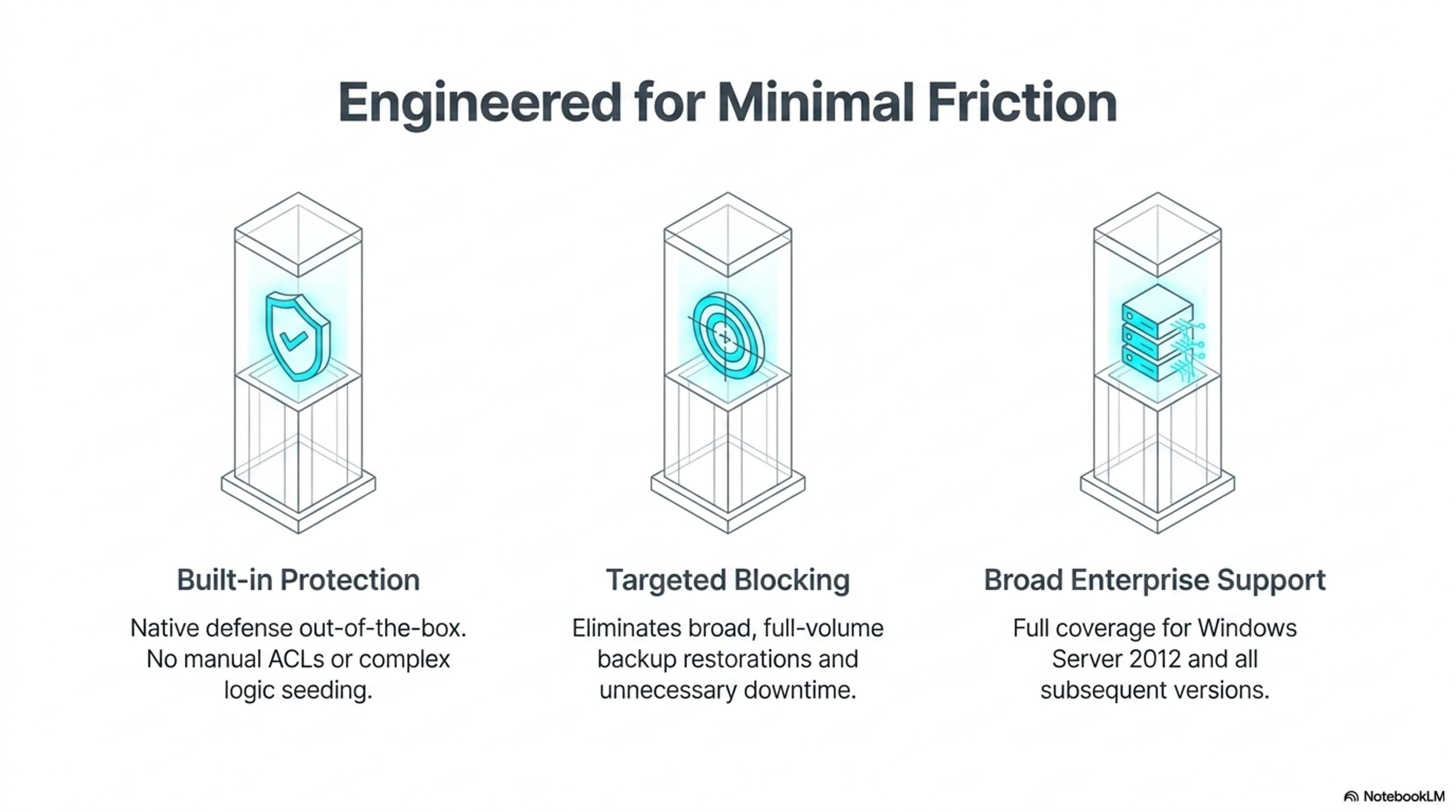
Athena EPP delivers three distinct operational advantages that allow enterprises to secure their data stores with minimal friction:
- Built-in protection with minimal configuration: Athena EPP provides native SMB ransomware protection right out of the box. Security teams do not need to spend time engineering custom access control lists (ACLs), manually seeding bait files, or writing complex detection logic before the protection becomes effective.
- Targeted blocking without taking the server offline: Athena EPP selectively blocks the specific attacking source IP rather than shutting down the entire file server or cutting off global SMB access. This engineering precision minimizes operational downtime and avoids unnecessary disruption to unaffected business units.
- Broad Windows Server support: Athena EPP provides comprehensive support for Windows Server 2012 and all subsequent versions, making it an ideal defense for a wide range of legacy and modern enterprise file-sharing environments.
Conclusion
SMB-based remote ransomware remains highly dangerous precisely because it masquerades as legitimate network traffic. While the ransomware payload may never execute locally on your file server, the business data hosted there can still be completely destroyed from an unmanaged endpoint.
To protect enterprise data stores, visibility at the SMB file-access layer is no longer optional—it is an architectural necessity. Sangfor Athena EPP eliminates this security blind spot by combining behavior monitoring, AI-driven detection, and network-layer containment. The result is faster detection, precise isolation, and resilient protection for the shared files your enterprise relies on every single day.