
Summarize this blog article with AI:
 Ask ChatGPT
 Ask Grok
 Ask Perplexity
 Ask Claude
 Ask Google AI
Each day, millions of people share things online, browse websites, and log on to their work networks without much thought about what happens behind the scenes. We type in a few words, and a website suddenly appears a few seconds later. However, between your device and the internet, there are mechanisms in place to keep you and those sites safe. These digital middlemen act as a “proxy” on your behalf.
A proxy, in its simplest form, is any person, authority, or system that is authorized to act as a substitute or intermediary for someone. In other words, a proxy acts on your behalf to perform specific tasks. Generally, proxies are used to protect one's identity, act where necessary, and provide a certain service. In computing, a proxy is used to act as a buffer between your device and the internet in a similar way, quietly managing traffic, improving performance, enhancing privacy, and enforcing security policies.
Now, proxy technologies have become much more popular as cyber threats increase and more people focus on fortified privacy online. Today, we’ll be learning about proxy servers, how they work, and what dangers they might pose to businesses. We’ll also be exploring how Proxy Avoidance Protection can be used to mitigate these risks for enterprises. For now, let’s get a better understanding of proxy servers.
What Is a Proxy Server?
In its simplest form, a proxy server acts as a middleman between a user and the Internet. Think of it as a trusted assistant. When you send an input out, the assistant checks it, secures it, and then forwards it to the recipient. The message is then relayed back through the assistant to you, without ever revealing who you are to the recipient. In many ways, this is the main proxy meaning in the digital world. This process ensures a level of anonymity, content filtering, and security for the user. Generally, people might look to using free proxy servers, or open proxies, to shield their IP addresses or identity online.
However, many organizations might also use proxies to control internet usage and maintain online security policies. As internet threats continue to evolve, proxy servers have gained traction, with the market expected to reach US$ 2.6 billion by 2031. There are several different types of proxy servers, but the most common seems to be forward proxies, which manage and forward internet traffic from a client to a server, enhancing security and privacy.
When a client wants to access a server, instead of going directly, it sends the request to the forward proxy, which relays it to the server. This way, the server only sees the proxy’s request, not the client’s request. Now, for interest’s sake, let’s look at a brief timeline exploring the origins of the proxy in computing to see how it was first used and needed:
1989: The concept of a "proxy" was first explicitly proposed in computer networks, acting as an intermediary connecting two devices that cannot communicate directly.
Early 1990s: The SOCKS protocol was introduced. This early proxy technology was primarily used to solve network communication problems where direct connections were not permitted.
1994: The European Organization for Nuclear Research (CERN) launched the first HTTP-based proxy server, used as a firewall system. This proxy intercepted internal and external communications, protecting institutional privacy by filtering requests and replacing IP addresses.
Since then, proxies have had a role in several computing tasks, making it easier to safely communicate across the web for people in every sector. Now, on the other side, we have reverse proxy servers that try to protect the website on their end.
What Is a Reverse Proxy?
Reverse proxies are used to protect websites from cyber threats and manage traffic more efficiently. While traditional proxies sit between users and the internet, a reverse proxy sits between the internet and a website's servers. Think of a reverse proxy as the receptionist for a large company who helps to direct all incoming requests to the right place to avoid any confusion or security breaches.
With a reverse proxy in place, web servers are not directly exposed to the internet either, providing enhanced security by limiting the attack surface for cyber-attacks and online threats. Reverse proxies further filter any malicious traffic generated during Distributed Denial-of-Service (DDoS) attacks. They’re also useful for load balancing when it comes to managing website traffic during peak periods, distributing it across multiple servers to prevent overloading or the risk of downtime.
Ultimately, reverse proxies are essential for performance optimization. Alongside cyber protection and traffic distribution, they can serve stored copies rather than generating the same webpage repeatedly. This reduces server workloads and improves page loading times.
Now, you might be reading this and thinking, “This sounds an awful lot like a VPN, no?”, and you wouldn’t be wrong to make that assumption because proxy servers and VPNs do operate on a similar premise, but that's about where the similarities end in reality.
What Is a Proxy vs VPN?
Technically, Virtual Private Networks, or VPNs, are better equipped for online privacy and trusted security when compared to proxy servers. This is because proxy servers typically protect or manage specific internet traffic, often at the application or browser level. On the other hand, VPNs create encrypted tunnels between devices and remote networks, securing all network traffic rather than just browser sessions. Ultimately, a VPN is more secure, dependable, and efficient.
Now, when it comes to choosing between a VPN and a proxy browser, you might have a different answer based on your individual or business needs. For enterprises, the modern digital landscape is constantly shifting, and so should our perspectives. With hybrid working environments, evolving cyber threats, and rapidly changing policies around access controls, enterprises need to look at the bigger picture. To simplify this, let’s see how proxies and VPNs generally match up for average business needs.
| Business Need | Proxy | VPN |
|---|---|---|
| Secure remote access | Limited | Excellent |
| Full-device encryption | No | Yes |
| Privacy on public networks | Hides IP, but activity may still be tracked | Hides IP, location, and activity |
| Speed | Faster without encryption | Slower due to encryption |
| Coverage | Protects only specific apps or browsers | Protects all device applications |
| Price | Mostly free with subscription tiers | Mostly subscription-based |
At the end of the day, the main difference between a VPN and a proxy server is how much protection they give you. While a VPN sends all your internet traffic through an encrypted tunnel and hides your IP address across every app and website, a proxy can only change your IP for the specific app or site you set it up for, and does not typically encrypt your data. While proxy servers are still the easiest route for anonymity for individuals, they do also pose a threat to your enterprise overall.
The Hidden Security Risks of Unmanaged Proxies
As an organization, you need to understand a few simple truths about people and their habits. While we want to believe that every employee understands the reality of security risks, they can still, ironically, create a network vulnerability while trying to protect themselves online. As businesses shift to stricter access controls and policies, employees try to bypass these web filters by using anonymous proxies to access restricted content or shadow IT applications.
Whether this happens through proxy servers, Tor browsers, or VPNs, they all ultimately lead down the same slippery slope. While most people do not have malicious intentions and simply want access to blocked content, the risks for your enterprise’s network can still be significant, leading to:
- Malware Infections
Most anonymous proxy services lack proper security measures, which opens up your network to a host of vulnerabilities. Cybercriminals often use free proxy platforms to distribute malware, spyware, ransomware, and phishing content. - Data Leaks
Using unauthorized proxies to route traffic can lead to sensitive business information passing through third-party infrastructure. This puts client data, financial records, and any number of critical files at risk. Japan’s SoftBank admitted a malfunction in a proxy server on January 19th of this year caused some customers logging into “My SoftBank” via mobile phone line authentication to see other users’ personal information. - Compliance Violations
Most companies have to adhere to strict regulations about their data and access controls. When employees use unauthorized proxies, the company risks violating these policies and facing hefty fines and consequences. - Reduced Visibility
By using proxy tools, employees limit the visibility of security teams, making them unable to contain and respond to threats that would normally be flagged immediately.
In the past, several cyberattacks were a direct result of bypassed security policies. In 2019, Capital One suffered a data breach that impacted the personal information of over 100 million people. The attacker exploited a Server-Side Request Forgery (SSRF) vulnerability through a web application firewall acting as a reverse proxy, allowing access to cloud metadata services and ultimately sensitive customer data. So, how do you avoid these types of situations altogether?
Implementing Effective Proxy Avoidance Protection
Enterprises need proxy avoidance protection to reduce the risk of blind spots caused by the use of proxy server platforms. Proxy avoidance is what happens when users intentionally sidestep an organization’s internet policies through anonymization technologies. Modern proxy avoidance protection focuses on preserving visibility, enforcing policy, and reducing organizational risk. To identify and block the use of these platforms, security teams can focus on several strategies, including:
- Enhanced Detection: Security teams can continuously monitor networks and identify any known anonymization services.
- End-to-End Protection: Instead of using a basic antivirus software, teams can opt to use a modern endpoint protection layer that combines a powerful antivirus, built-in endpoint detection and response, and robust endpoint management. This actively protects your endpoints from threats.
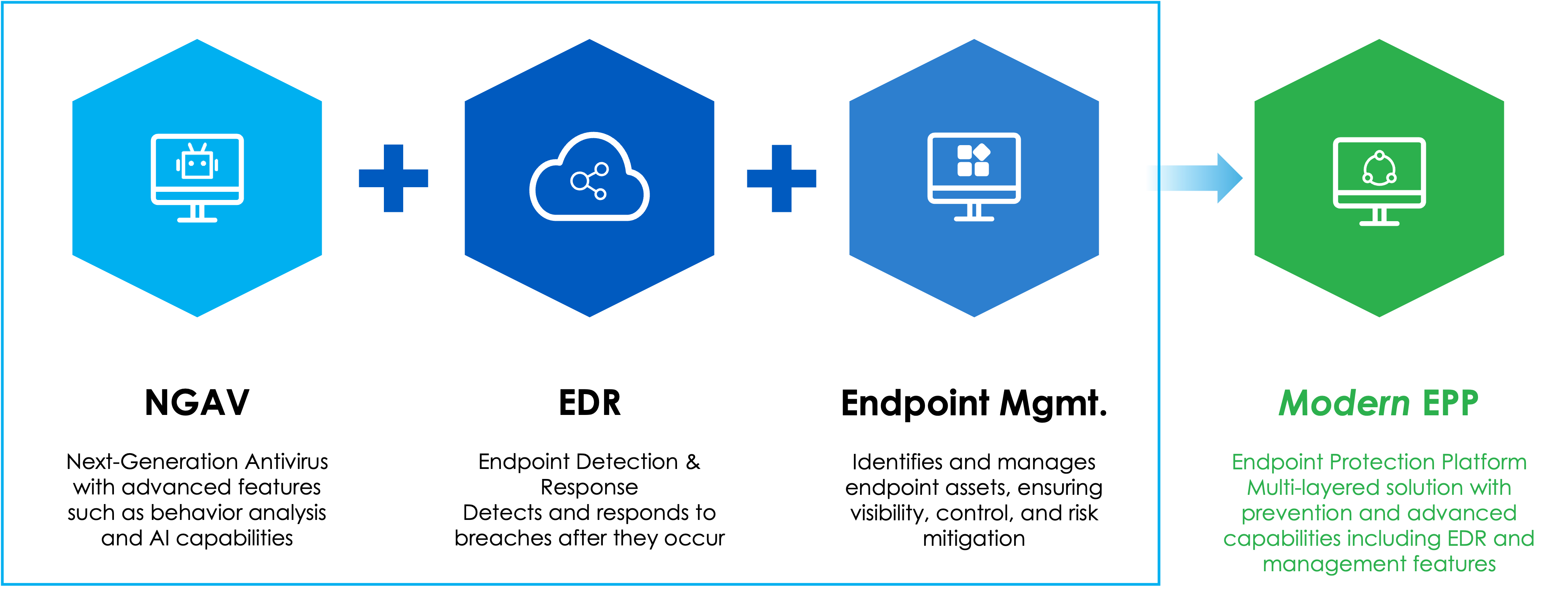
- Identifying Encrypted Tunnels: Modern proxy tools often use encrypted communication channels that resemble legitimate traffic. With advanced detection, teams can analyze and identify behavioral patterns rather than relying solely on ports and protocols.
- Application Filtering: Rather than only looking at destination URLs, teams can also identify the actual applications in use. This allows organizations to distinguish between legitimate business tools and proxy avoidance applications.
- Continuous Threat Intelligence: Cybercriminals constantly develop new proxy tools to ease their way into networks. By continuously updating your threat intelligence, your company is better equipped to deal with evolving threats.
It should be noted that the ultimate goal of proxy avoidance protection is not surveillance for its own sake. The aim is to maintain the security, compliance, and operational integrity of the organization across an increasingly complex digital minefield. So, how can we put this all into an actionable framework for your company?
Evaluating Enterprise Proxy Protection Frameworks
Most legacy firewalls simply do not have the capacity to keep up with modern proxy detection tools. While blocking a handful of ports or websites may have been enough a few years ago, the traditional method of filtering was developed for an internet landscape that looked vastly different from today's.
Now, encrypted traffic accounts for the majority of internet communications, making older filtering tools significantly less effective. Most modern proxy detection tools focus on application-aware security footholds. To stay ahead, companies must evaluate whether their existing controls can identify sophisticated proxy avoidance techniques.
Legacy Web Filtering Vs. Advanced Proxy Protection
| Criteria | Legacy Web Filtering | Advanced Proxy Protection |
|---|---|---|
| Traffic Visibility | Basic URL categorization | Deep packet inspection and application awareness |
| Evasion Detection | Easily bypassed through VPNs and proxies | Detects and blocks encrypted tunnels, anonymizers, and Tor traffic |
| Management Overhead | Frequent manual updates and rule maintenance | Automated threat intelligence and dynamic updates |
| Impact on Business Productivity | Higher false positives | Context-aware filtering with greater precision |
| Threat Detection | Limited visibility into encrypted traffic | Advanced behavioral analysis and risk detection |
| Compliance | Basic support | Comprehensive visibility and policy enforcement |
| Scalability | Challenging in hybrid environments | Designed for cloud, remote, and hybrid workforces |
While modern security teams prioritize visibility, application intelligence, and automated threat detection over simplistic URL-based filtering methods, it’s up to organizations themselves to reflect on a broader cybersecurity trend: security controls must understand context, not just connections. This is where Sangfor Technologies can help to redefine your approach to proxy avoidance protection.
How Sangfor Proxy Avoidance Protection Secures Your Network
Sangfor Proxy Avoidance Protection takes unified security to the next level. By integrating and correlating endpoint, container, and workload application behavior, Sangfor offers advanced visibility and control over network traffic, successfully identifying and blocking evasive applications and proxy tools that most legacy systems would miss. Whether you’re looking for dedicated VPN solutions or something more, like Sangfor EasyConnect, which gives you secure remote access to Windows desktops and applications from any device or operating system.
Alternatively, you could go for Sangfor’s SSL VPN platform, which provides secure remote user access to the enterprise network through a Secure Socket Layer (SSL) enabled by an SSL VPN gateway. This allows you to access web resources and applications using native HTTP over SSL (HTTPS) browser support, ensuring comprehensive security and streamlined optimization.
As proxy avoidance techniques become more sophisticated, Sangfor provides a level of automated and evolved visibility with advanced inspection and application-aware intelligence to identify evasive traffic patterns. With Sangfor, you can ensure that your company abides by access and acceptable use policies, identifying, controlling, and reporting on both allowed and malicious applications running on endpoints and communicating across the network.
By limiting unauthorized tunnels and anonymization services, Sangfor helps reduce the risk of malware, data leaks, and compliance violations, whether you’re operating from headquarters, branch offices, or remote locations. As a global leader in the industry, Sangfor is versatile, serving Mid-Market to Large Scale Enterprise customers worldwide, including the Middle East, Europe, EMEA, LATAM, and APAC markets.
Conclusion
Understanding proxies is the first step to understanding the dangers of unauthorized platforms in the workplace. While proxies were built to keep you safe online, they can act as a backdoor for malicious threats and organizational instability. It’s also important to evolve your company's security to keep up with new bypassing platforms and emerging risks, making proxy avoidance protection an essential component of modern cybersecurity programs. Today, you shouldn’t be asking why anyone would need proxies, but rather if your company has the visibility and control needed to manage them effectively.
FAQ
An intermediary between a user's device and the internet that acts on the user’s behalf, receiving requests and sending back results, while ensuring enhanced security, privacy, and performance controls.
To manage internet traffic, improve security, enforce access policies, protect user identities, and optimize network performance.
Reverse proxies sit in front of web servers and manage incoming traffic from internet users, while traditional forward proxies sit between users and the internet to manage outbound requests.
A proxy typically handles specific application or browser traffic, while a VPN encrypts and secures all network traffic from a device, providing broader privacy and security protection.
They reduce network visibility, increase compliance risks, and can create security blind spots, exposing users, and the larger network, to malware, phishing attacks, and data theft.
A security service that detects and blocks unauthorized proxy services, VPNs, anonymizers, and encrypted tunnels used to bypass organizational policies.