
Summarize this blog article with AI:
 Ask ChatGPT
 Ask Grok
 Ask Perplexity
 Ask Claude
 Ask Google AI
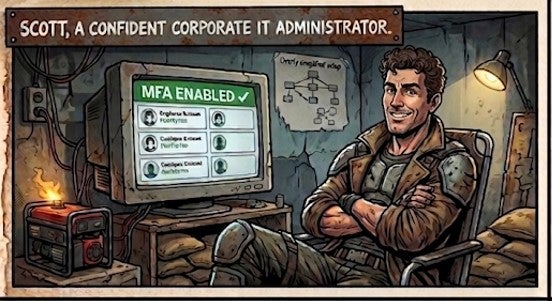
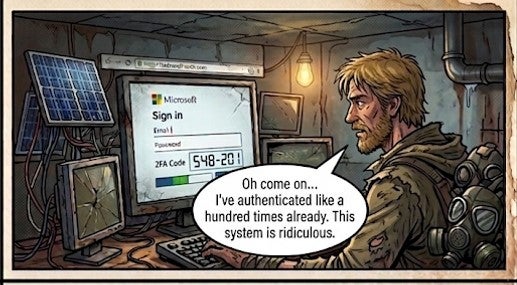
The Story: I HAVE MFA. I’M SAFE.
Threat Overview
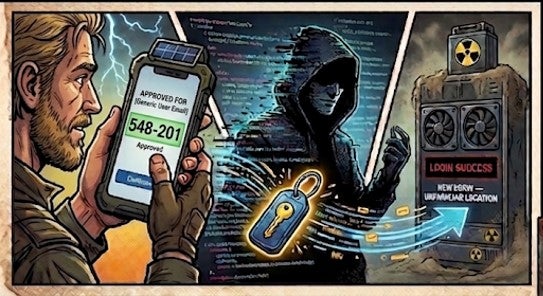
Recent Singapore arrests linked to the Tycoon2FA network highlight the growing risk of phishing-as-a-service (PhaaS). Tycoon2FA, which emerged in 2023, used adversary-in-the-middle phishing to capture authenticated sessions after users completed familiar MFA steps.
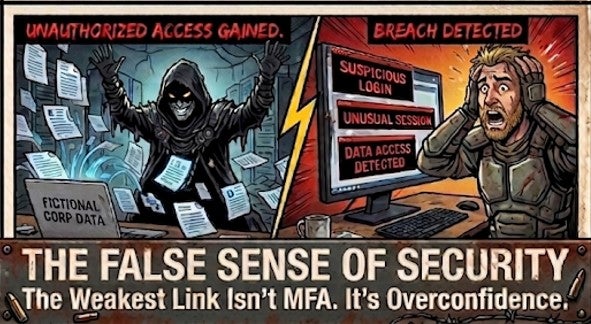
The lesson is not that MFA has failed. MFA still reduces account-compromise risk. The real question is whether organizations can detect when a legitimate-looking MFA approval is being abused in the wrong context.
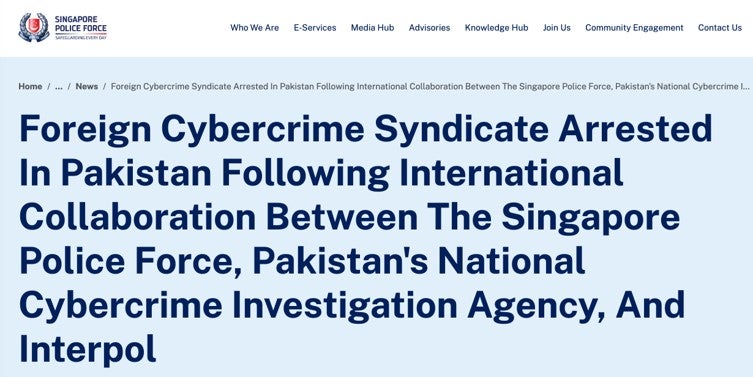
Source: Singapore Police Force
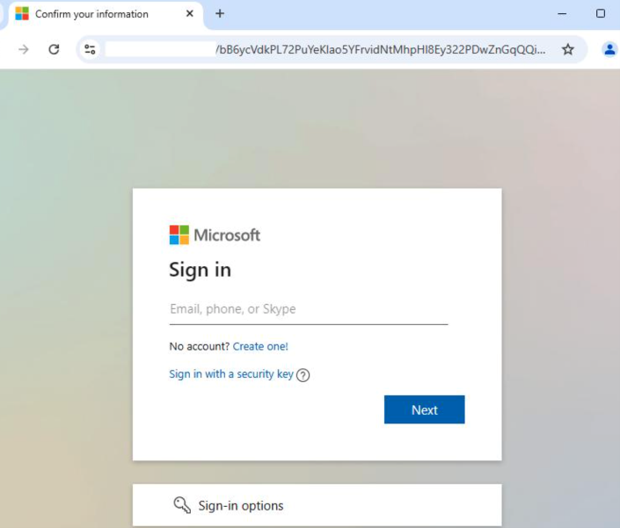
Figure: The Sample of Tycoon2FA Phishing Webpage
Confirmed Facts and Risk Inference
Confirmed facts: Singapore authorities reported arrests linked to the Tycoon2FA cybercrime network, which was allegedly used to target Singapore victims. Security research has documented Tycoon2FA’s use of adversary-in-the-middle (AiTM) phishing to obtain authenticated sessions after victims complete MFA.
Risk inference: The invoice, payment change, mailbox access, and fraudulent transfer shown above are plausible consequences of a compromised business session. They are not confirmed details of the reported Singapore cases.
Why a Familiar Page Can Be Enough
Credential phishing used to focus on the password. Modern PhaaS operations can target what happens after it: browser sessions, approval tokens, device-code authorization, and the trusted business context around a mailbox or collaboration account. A user may do what policy asks, approve MFA, and still hand an attacker an authenticated path when the surrounding page or authorization flow is deceptive.
| Risk element | Why it matters |
| Lookalike sign-in flow | Familiar branding and urgent business language reduce scrutiny. |
| MFA approval in the wrong flow | A successful approval may establish a session an attacker can reuse. |
| Mailbox and collaboration context | Messages, contacts, invoice timing, and workflow language make fraud more convincing. |
| Valid-account appearance | A stolen session may create activity that looks legitimate unless context is reviewed. |
Attack Chain and MITRE ATT&CK Mapping
| Stage | Defensive interpretation | Relevant ATT&CK mapping |
| Delivery | A familiar business message directs a user into a deceptive flow. | T1566 Phishing |
| Credential or portal capture | The flow seeks credentials, approval artifacts, or browser-session material. | T1056.003 Web Portal Capture |
| Token or session misuse | An approved session or application token is reused. | T1550.001 Application Access Token |
| Follow-on access | The account is used as a valid identity to view business context. | T1078 Valid Accounts |
Mappings describe a defensive lens. They do not assert that each technique occurred in every Tycoon2FA-related case.
Recommended Actions
- Use phishing-resistant MFA with device posture and conditional access.
- Monitor anomalous sign-ins, devices, sessions, OAuth changes, mailbox rules, and unusual data access.
- Limit session impact with least privilege, role separation, and time-limited access.
- Independently verify payment or account changes through trusted channels.
- Use phishing detection, DNS controls, threat intelligence, and brand-impersonation monitoring.
- Check whether corporate credentials appear in known breach datasets.
- Rehearse identity-incident response, including session revocation, token review, mailbox checks, payment escalation, and evidence preservation.
How Sangfor Helps
|
Problem |
How we help |
|
Tycoon2FA uses highly convincing fake login pages, redirects, CAPTCHA and constantly changing infrastructure. A user may see HTTPS and a familiar-looking login experience, making traditional URL-based judgment difficult. |
Athena SASE secures users' access to the internet and SaaS applications through cloud-delivered security controls. Its integrated SWG, ZTNA, FWaaS, DLP and EDR capabilities provide security enforcement for users wherever they work.
|
|
Tycoon2FA's AiTM approach can relay the victim's authentication to the legitimate service and capture the resulting authenticated session. This means “MFA approved” does not necessarily mean “the session is safe.” |
Athena XDR correlates security telemetry across multiple technologies and uses AI-driven analytics and Security GPT to turn large volumes of alerts into actionable incidents. “Did the user successfully authenticate?” Athena XDR helps security teams investigate the broader context:
This enables organizations to correlate suspicious web activity, endpoint behavior, network activity and subsequent account/session-related anomalies into a broader incident. |
|
A compromised session can become the starting point for follow-on activity such as mailbox manipulation, persistence, data access and additional phishing. Tycoon2FA research has documented attackers maintaining access through stolen sessions and tokens even after password changes unless active sessions are revoked. |
Athena MDR adds 24/7 expert monitoring, investigation and response, backed by Athena XDR and Security GPT. Athena MDR is designed to address security-operation resource gaps and provides expert-led detection and response. That means when suspicious activity occurs outside normal business hours, organizations don't have to wait for the internal security team to notice it.
|
Closing Thought
An MFA prompt should be a checkpoint, not a reason to stop thinking. When attackers can exploit trusted sessions through convincing phishing, security depends not only on technology, but also on awareness, verification, and context.
MFA protects the account. Awareness protects the MFA.
Source Index
- https://www.asiaone.com/singapore/tycoon2fa-pakistani-nationals-arrested-singapore-police - Singapore police-linked reporting and local-case context.
- https://www.microsoft.com/en-us/security/blog/2026/04/30/email-threat-landscape-q1-2026-trends-and-insights/ - historical technical context on Tycoon2FA and AiTM phishing.
- https://www.proofpoint.com/us/blog/threat-insight/device-code-phishing-evolution-identity-takeover - device-code phishing trend and token-risk context.
- https://www.bleepingcomputer.com/news/security/phishing-service-spoofs-ringcentral-to-steal-microsoft-365-accounts/ - current PhaaS evolution context.